Embroidery gets easier when each design decision has a job. Instead of collecting techniques at random, use the subject, scale, fabric and final look to decide what belongs in the hoop. This guide focuses on the parts that most directly affect a clean, stitchable result.
What matters most
Build autumn designs with restrained warm palettes and varied organic shapes. The goal is not to force every possible technique into one project. A stronger result usually comes from a small number of deliberate choices that are consistent from the first transferred line to the final stitch.
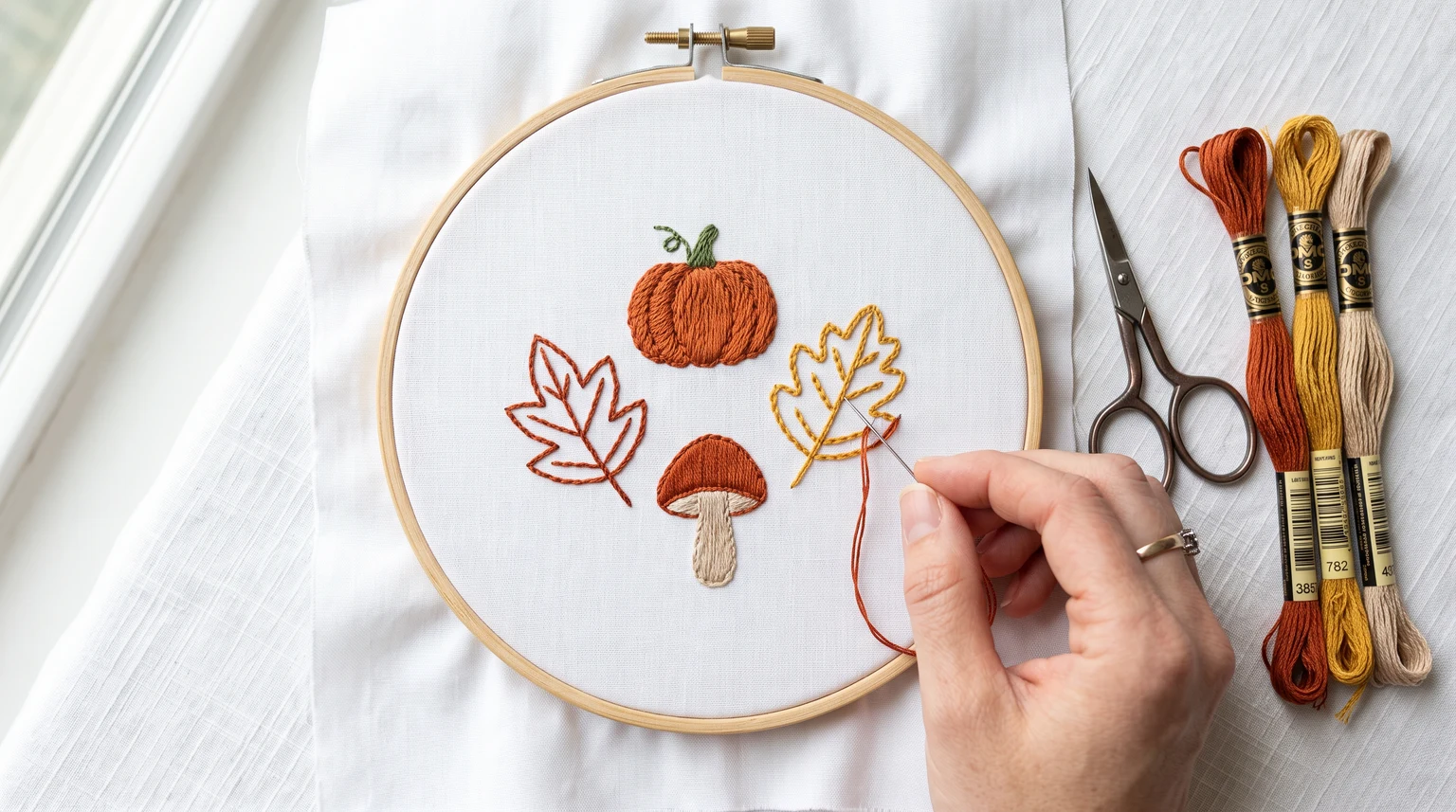
- Fallen leaves. Keep it proportional to the final hoop size and the amount of detail you can stitch cleanly.
- Mushrooms. Keep it proportional to the final hoop size and the amount of detail you can stitch cleanly.
- Pumpkins. Keep it proportional to the final hoop size and the amount of detail you can stitch cleanly.
- Berries and seed heads. Keep it proportional to the final hoop size and the amount of detail you can stitch cleanly.
- Warm rust, ochre and muted green. Keep it proportional to the final hoop size and the amount of detail you can stitch cleanly.
A practical workflow
- Choose one strong autumn focal motif such as a mushroom cottage or pumpkin form.
- Add leaves and berries as framing elements rather than equal focal points.
- Use two or three warm values plus one cooler green or teal for contrast.
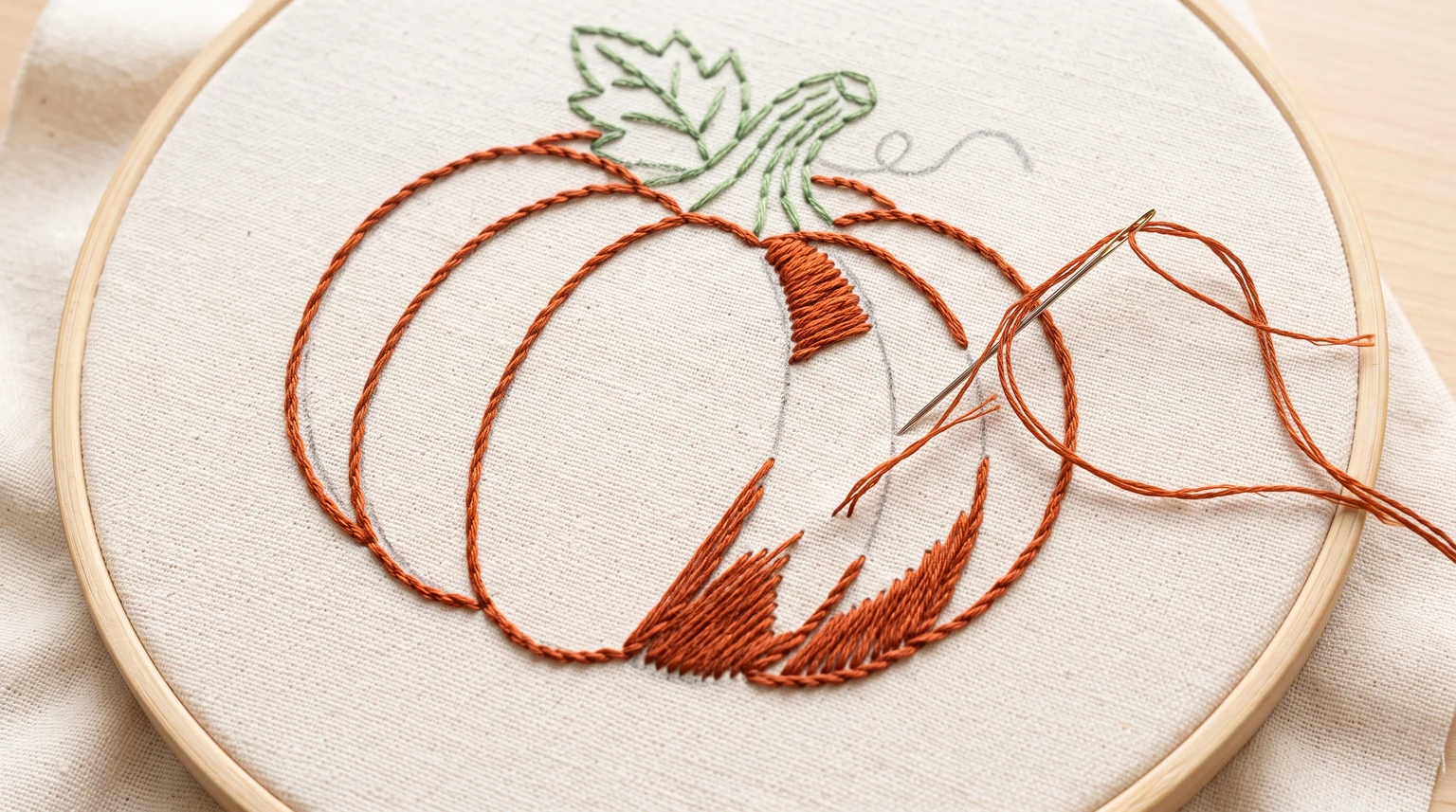
- Let stitch direction follow curved pumpkin ribs, caps and leaf shapes.
- Use open line work around dense objects to keep the hoop balanced.
Work in short sections and check the design from normal viewing distance, not only from a few inches away. If an area becomes crowded, simplifying one line or leaving a little more fabric visible often improves the whole composition.
Common mistakes to avoid
- Using only orange and brown so all shapes blend together.
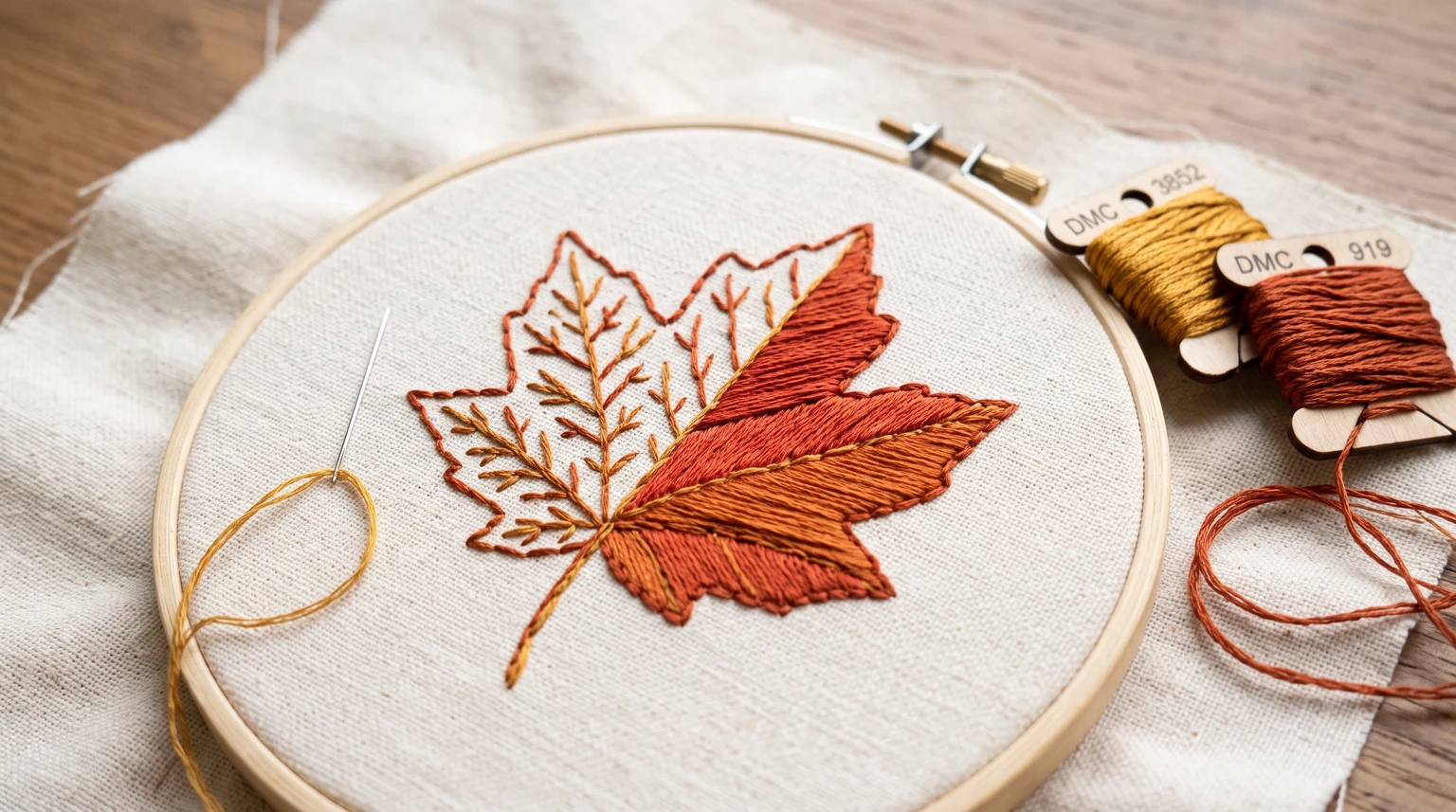
- Filling every leaf solid.
- Adding too many tiny berries or acorns around the edge.
These problems are easier to prevent than to repair after an area is densely stitched. A quick sample on scrap fabric can answer questions about strand count, stitch length and color contrast before you commit to the final piece.
Pattern examples to explore
Use finished pattern pages as visual references, then follow the linked technique guides for the parts you want to practice.
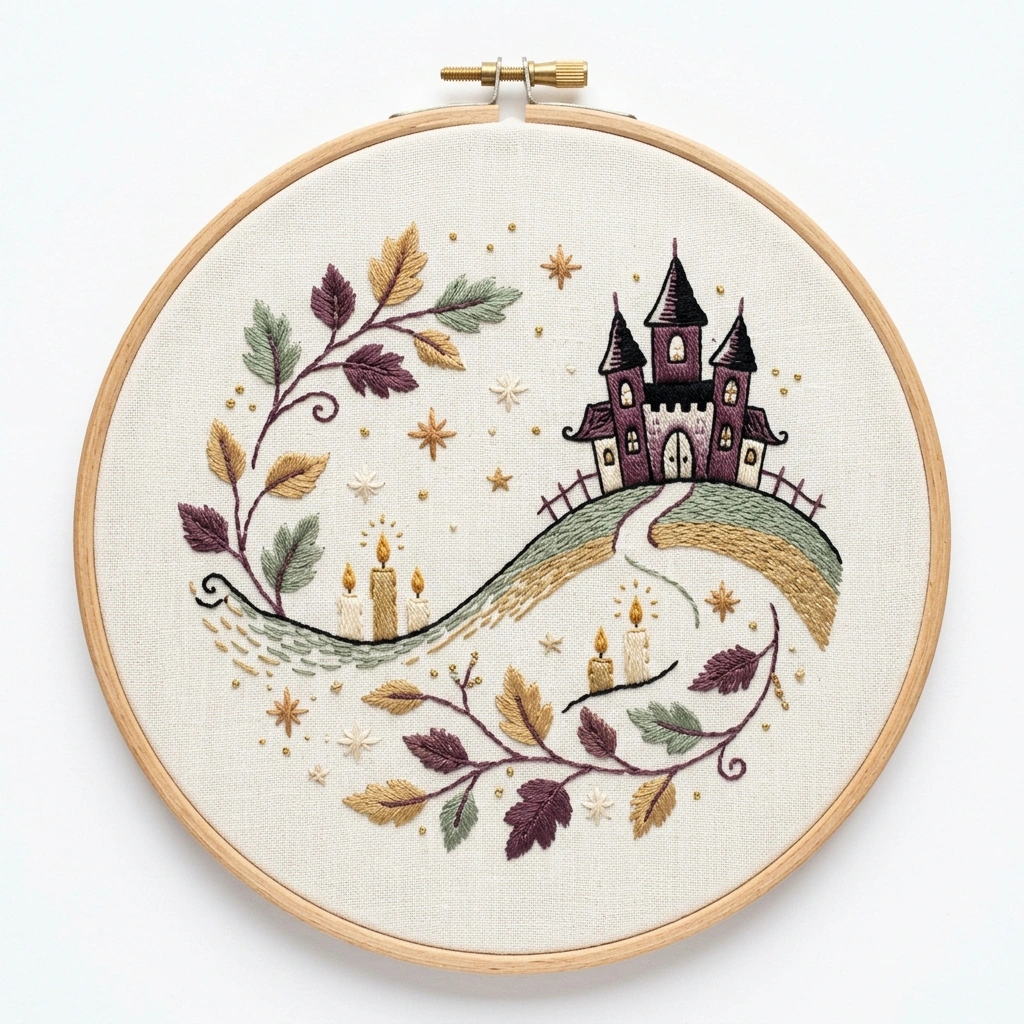
Autumn Castle on a Winding Hill
View & download →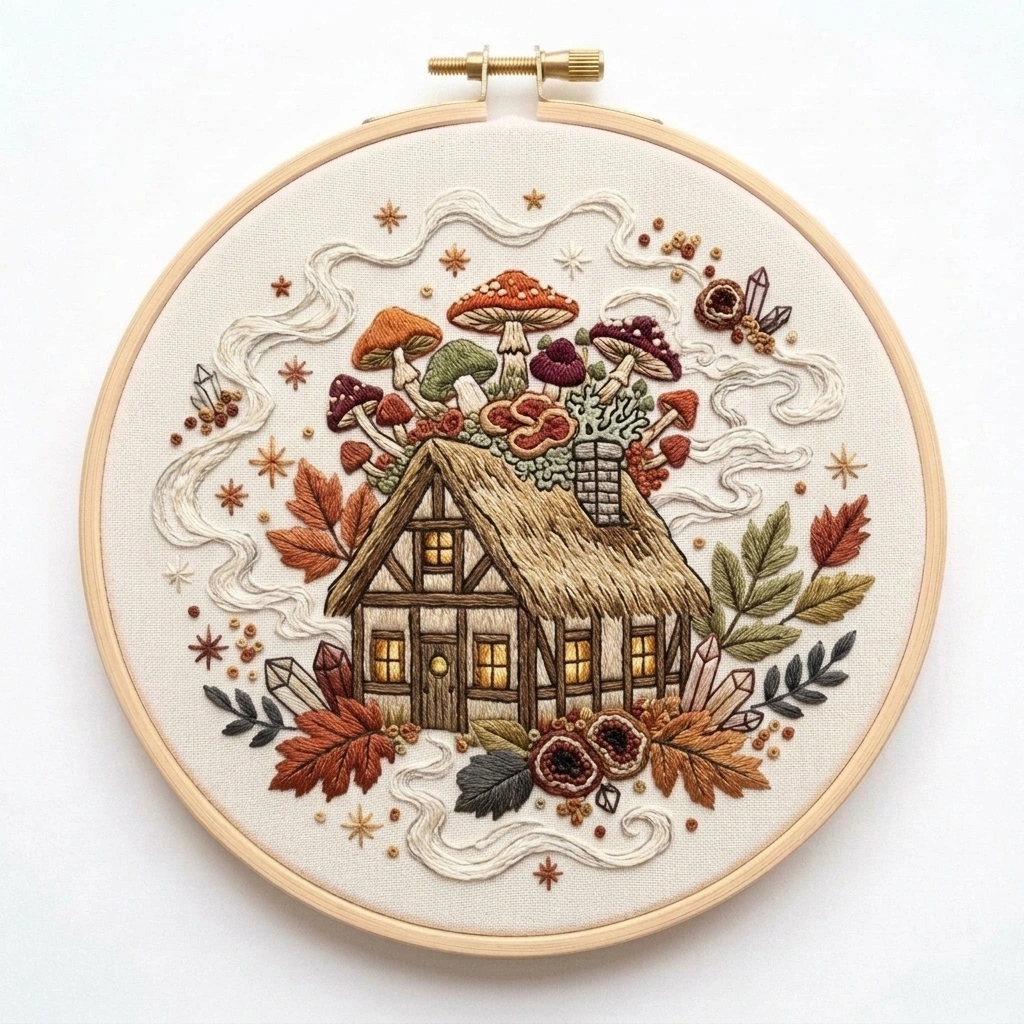
Autumn Mushroom Cottage Crystal Wreath
View & download →
Glasses Ghost Harvest Basket Autumn Pumpkin Wreath
View & download →Frequently asked questions
What colors work well for autumn embroidery?
Rust, burgundy, ochre, warm brown and muted greens are common, but a cooler accent can keep the palette from becoming flat.
Are mushrooms good beginner motifs?
Yes when simplified into a clear cap and stem with only a few decorative details.