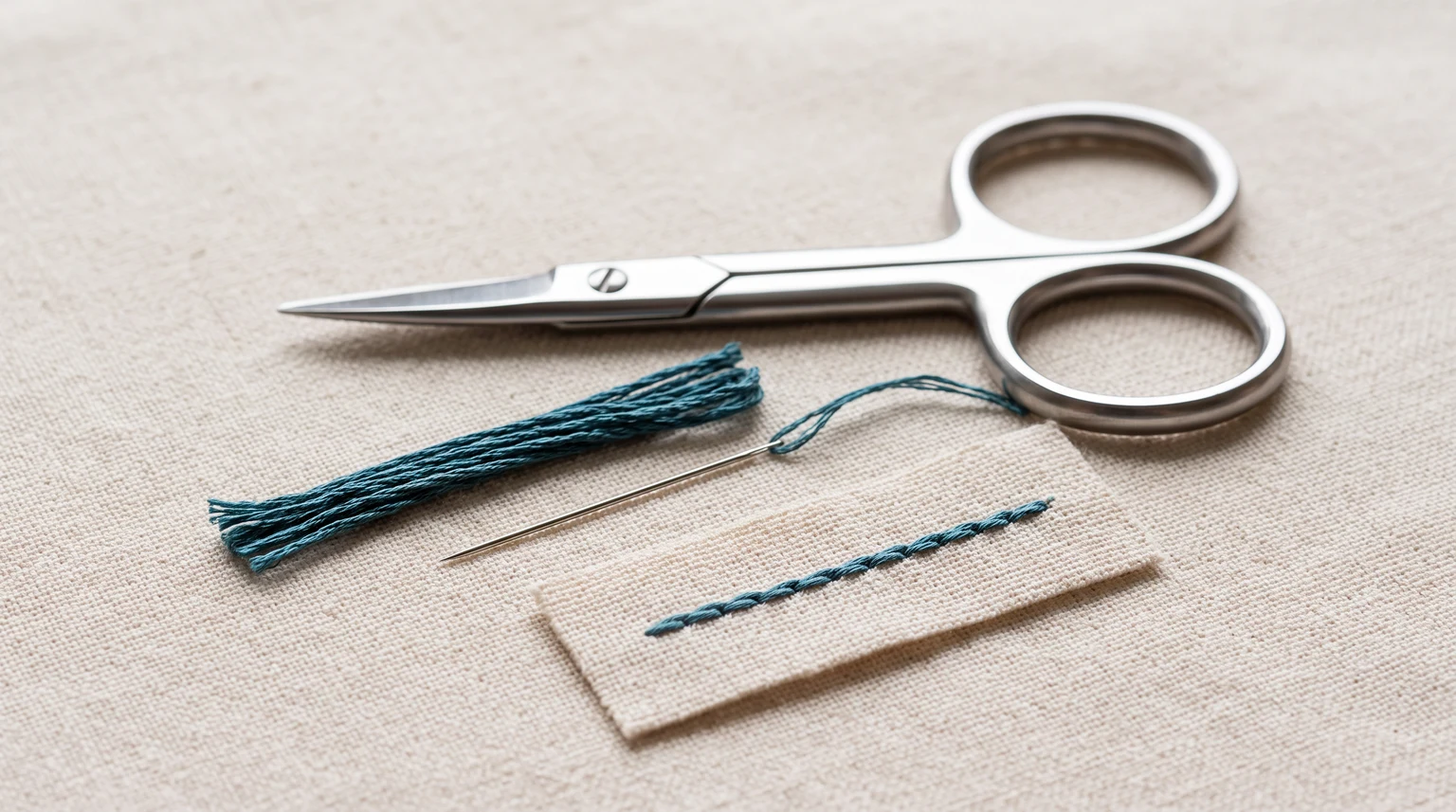
Embroidery scissors make clean cuts in thread and help you trim a finished project carefully. A small sharp pair is convenient near the hoop, while larger fabric scissors are better for cutting the cloth itself. You do not need an ornate design: choose a pair that feels comfortable and closes cleanly at the tips.
Use sharp small scissors to cut floss cleanly. Keep a separate pair for fabric and avoid cutting paper or wire with your embroidery scissors. Check where the blades are pointing before trimming near stitches.
Choose scissors for the job
Look for a comfortable grip, a smooth opening movement and blades that meet at the tips. Small pointed blades help you see the thread you are trimming. They are useful for loose ends, but they are not the best tool for cutting a large piece of fabric.
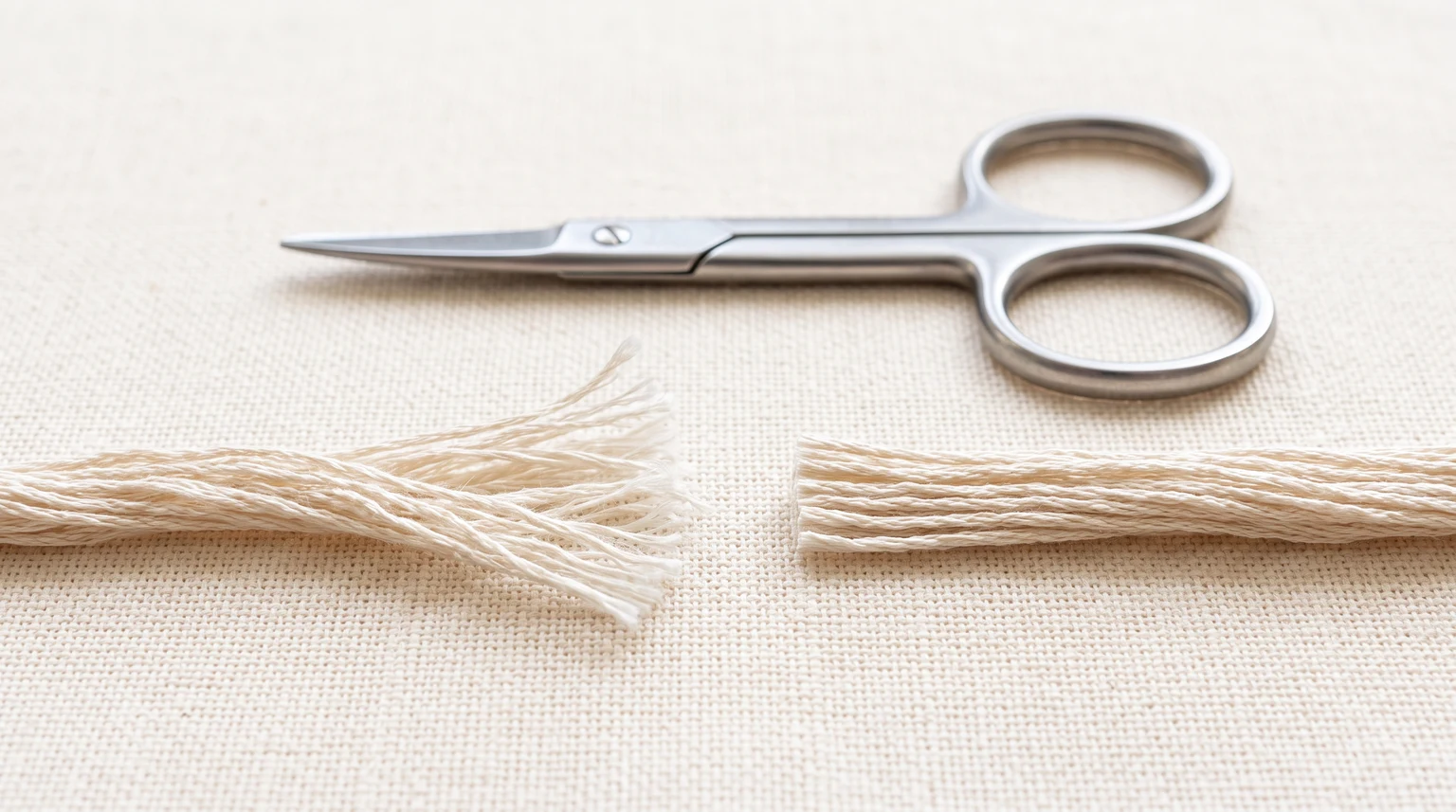
If a cut leaves a fuzzy thread end, check the blade condition. A clean end is easier to pass through an embroidery needle. A simple sharp pair can work as well as a decorative one.
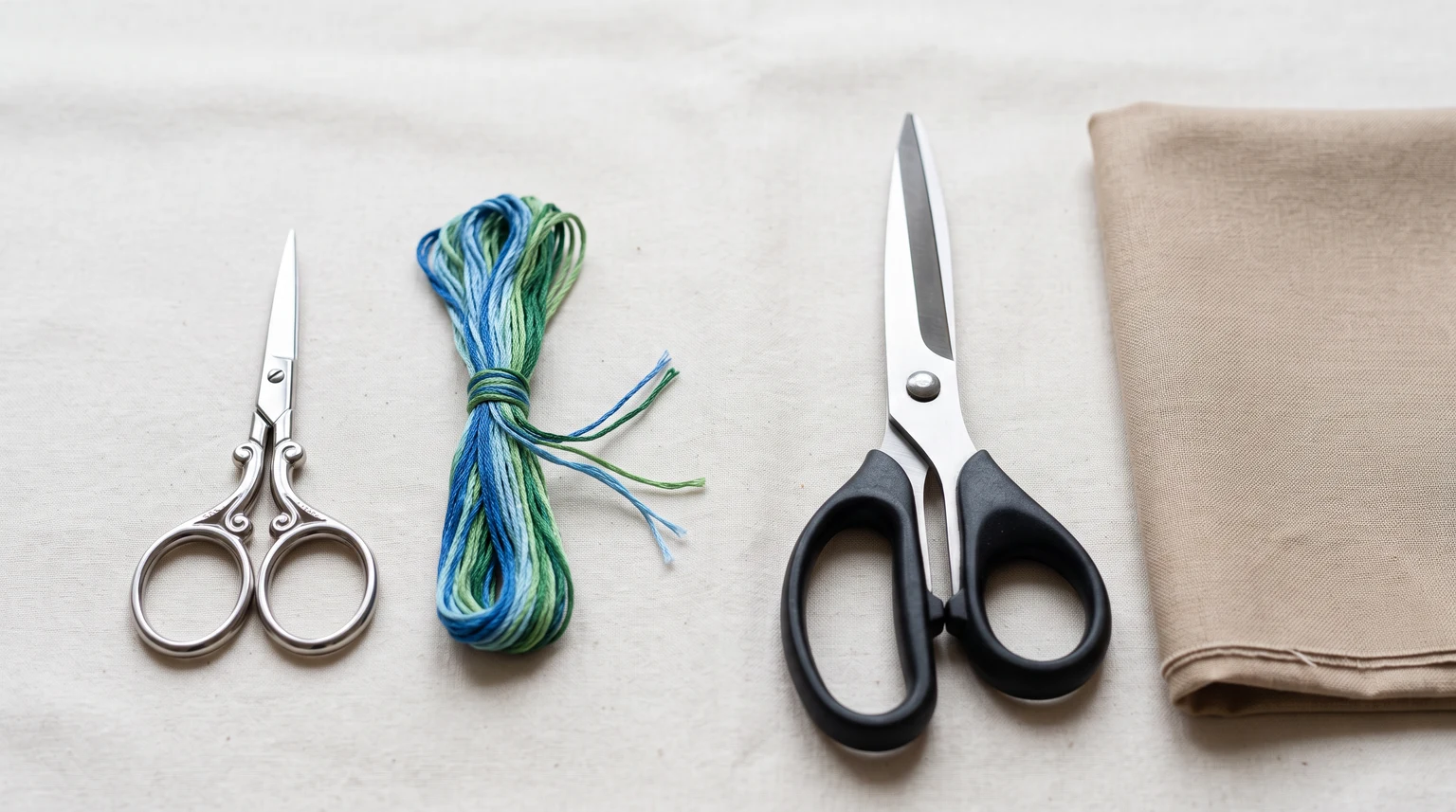
Cut floss without fraying it
- Lay out the length of thread you need without stretching it tightly.
- Hold the thread so you can see the cutting point clearly.
- Cut in one smooth movement instead of repeatedly chewing through the bundle.
- Align the strand ends before threading the needle.
Keep the scissors away from the hooped fabric while cutting a new length. Separating the strands first is covered in the floss preparation guide.
Trim finished work and store the scissors
Secure a thread end before cutting it. Lift the loose tail away from the stitched surface so the blades cannot catch a finished petal or outline. When trimming cloth for a hoop back, use fabric scissors and leave the margin needed by your chosen finish.
Keep scissors dry, protect their tips and put them away with the rest of the kit. If they no longer cut cleanly, have them serviced when appropriate or replace them. Do not use their points to force a needle hole open or scrape a transfer mark.
Frequently asked questions
Do I need special embroidery scissors?
A small sharp pair is helpful, but it does not need to be a specialty or decorative model. The important points are a clean cut and comfortable control.
Can I use the same scissors for paper and floss?
It is better to keep thread and fabric scissors for those materials. Cutting paper can dull the edge and make later thread cuts less clean.
Further reading
Adapted from SimpleEnglishGuide.pdf, PDF pages 3. Wording and practical notes have been edited for this website.