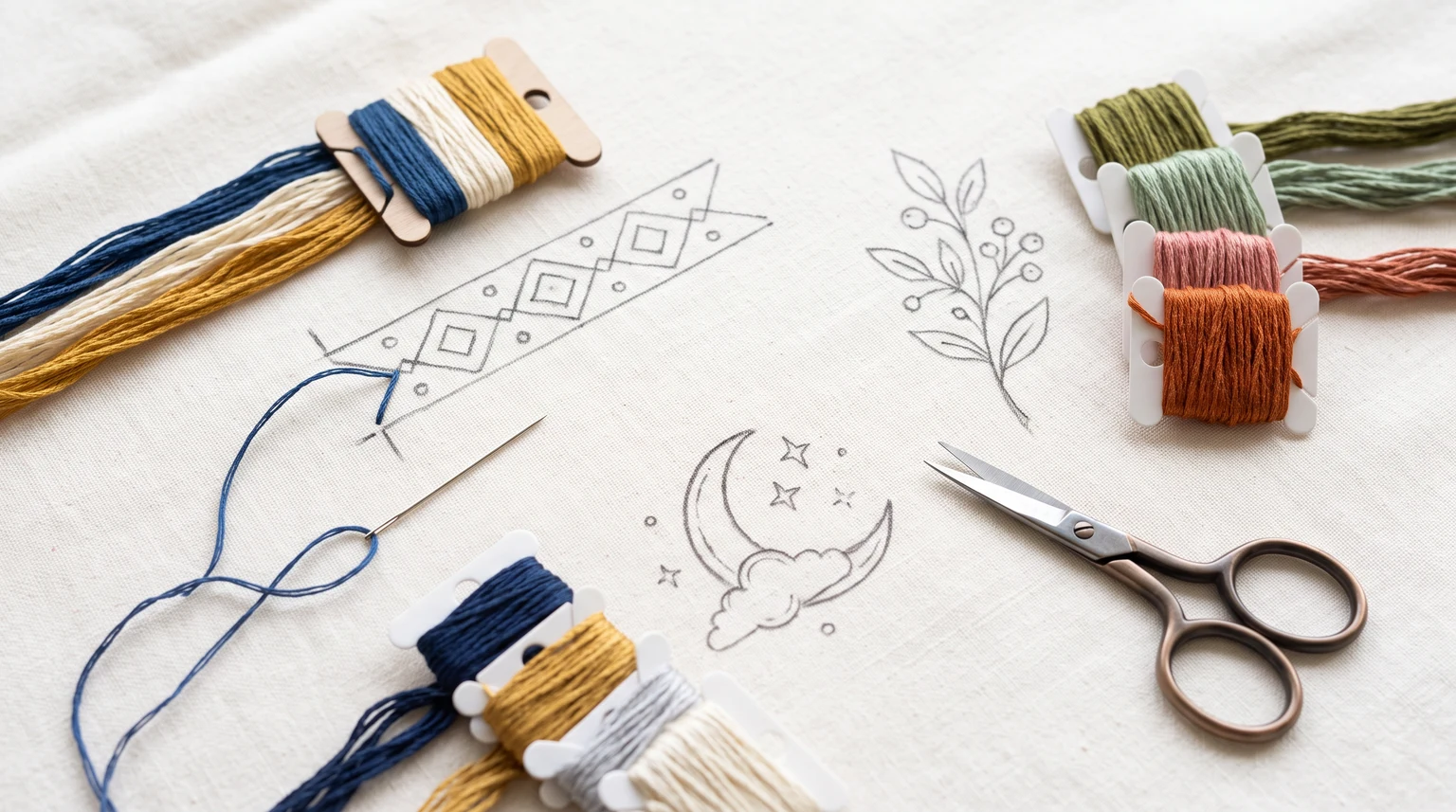
Embroidery gets easier when each design decision has a job. Instead of collecting techniques at random, use the subject, scale, fabric and final look to decide what belongs in the hoop. This guide focuses on the parts that most directly affect a clean, stitchable result.
What matters most
A practical way to evaluate ideas by stitch count, scale, color, detail and the time you want to spend. The goal is not to force every possible technique into one project. A stronger result usually comes from a small number of deliberate choices that are consistent from the first transferred line to the final stitch.
- Project scale. Keep it proportional to the final hoop size and the amount of detail you can stitch cleanly.
- Number of stitch types. Keep it proportional to the final hoop size and the amount of detail you can stitch cleanly.
- Color count. Keep it proportional to the final hoop size and the amount of detail you can stitch cleanly.
- Detail level. Keep it proportional to the final hoop size and the amount of detail you can stitch cleanly.
- Display goal. Keep it proportional to the final hoop size and the amount of detail you can stitch cleanly.
A practical workflow
- Start from the size of hoop you want to use.
- Choose a subject with a clear silhouette that still reads at that size.
- Limit the first draft to a few stitch types and colors.
- Remove details that do not change recognition of the motif.
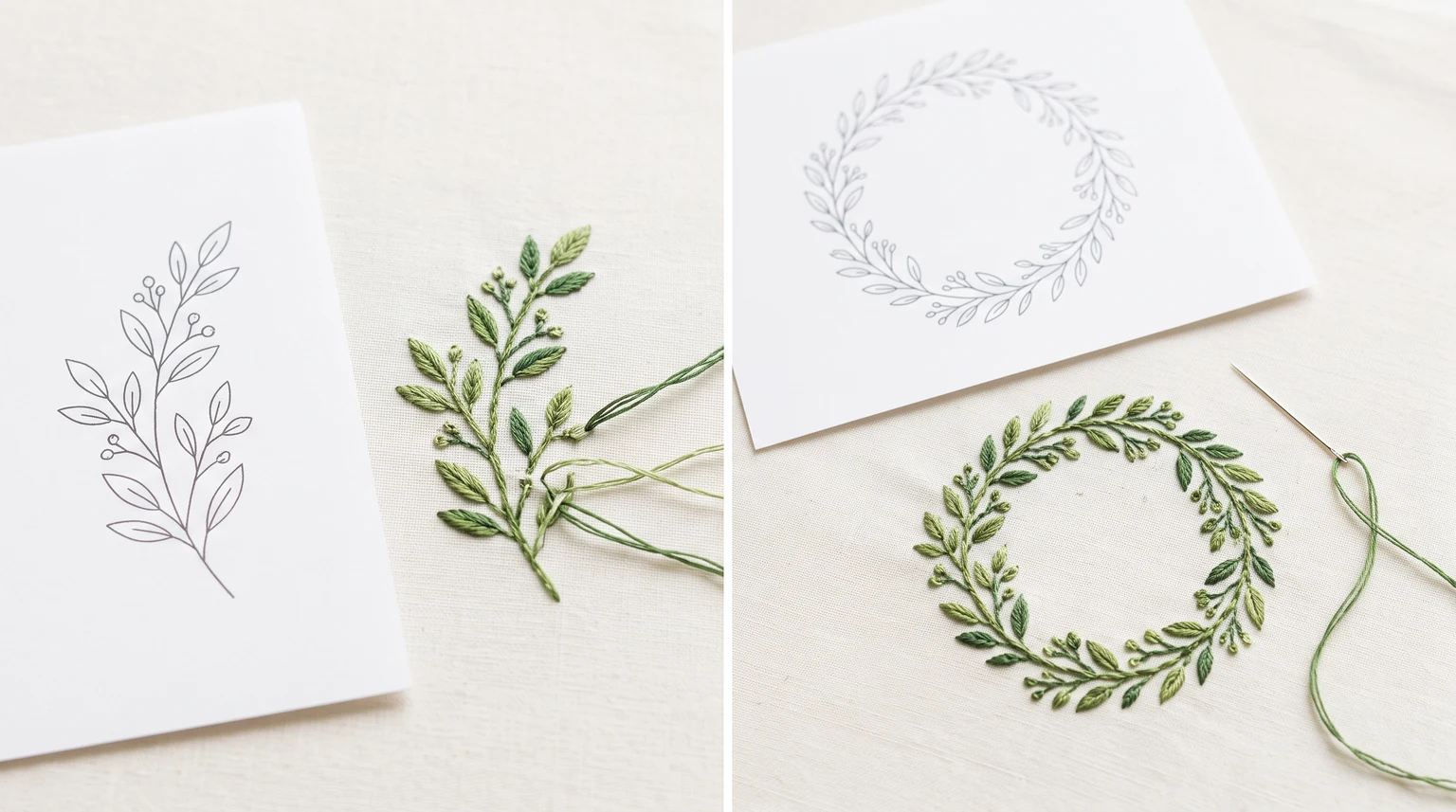
- Test the pattern on paper at final size before transferring it to fabric.
Work in short sections and check the design from normal viewing distance, not only from a few inches away. If an area becomes crowded, simplifying one line or leaving a little more fabric visible often improves the whole composition.
Common mistakes to avoid
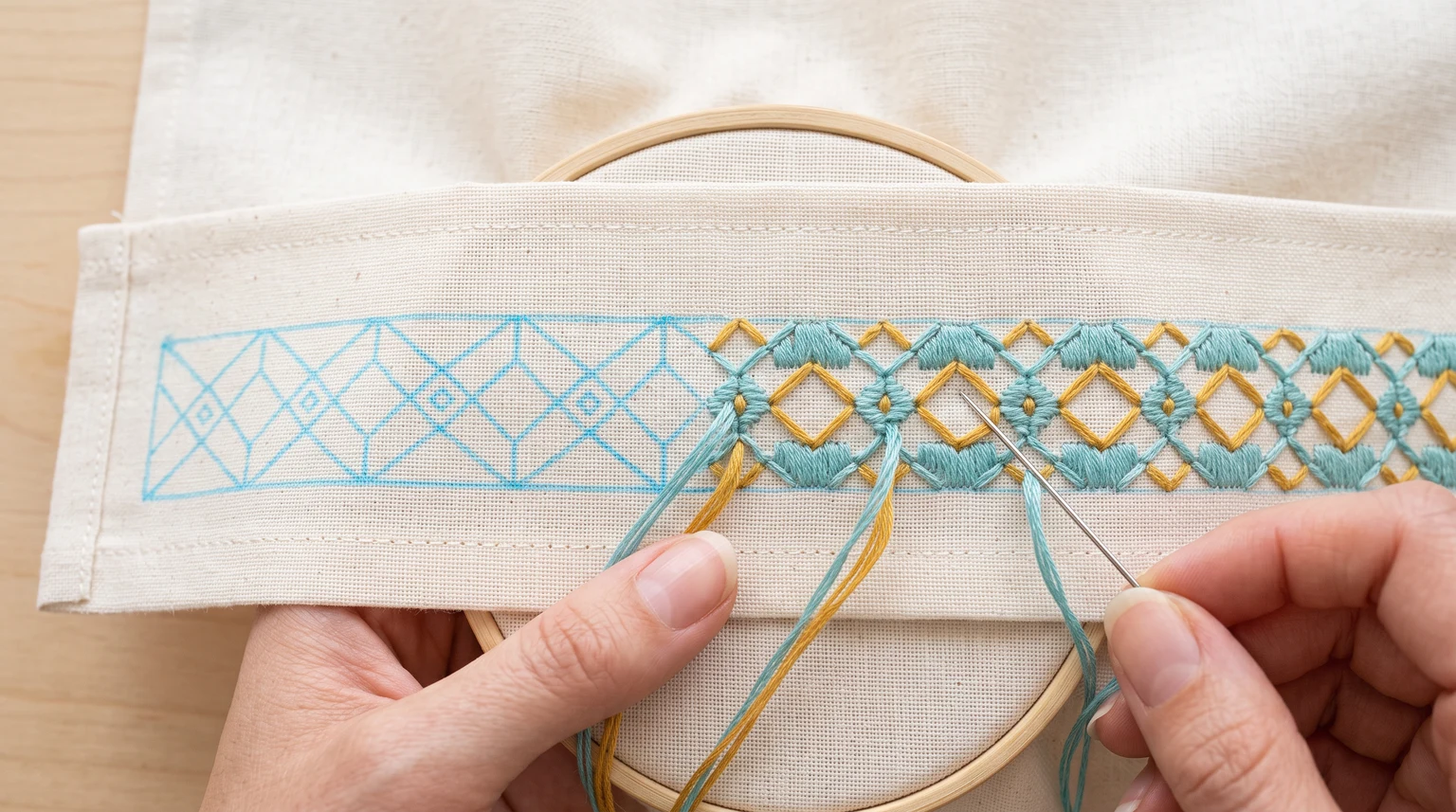
- Choosing a complex illustration only because it looks impressive on screen.
- Adding detail before deciding the final hoop size.
- Treating every empty space as something that must be decorated.
These problems are easier to prevent than to repair after an area is densely stitched. A quick sample on scrap fabric can answer questions about strand count, stitch length and color contrast before you commit to the final piece.
Pattern examples to explore
Use finished pattern pages as visual references, then follow the linked technique guides for the parts you want to practice.
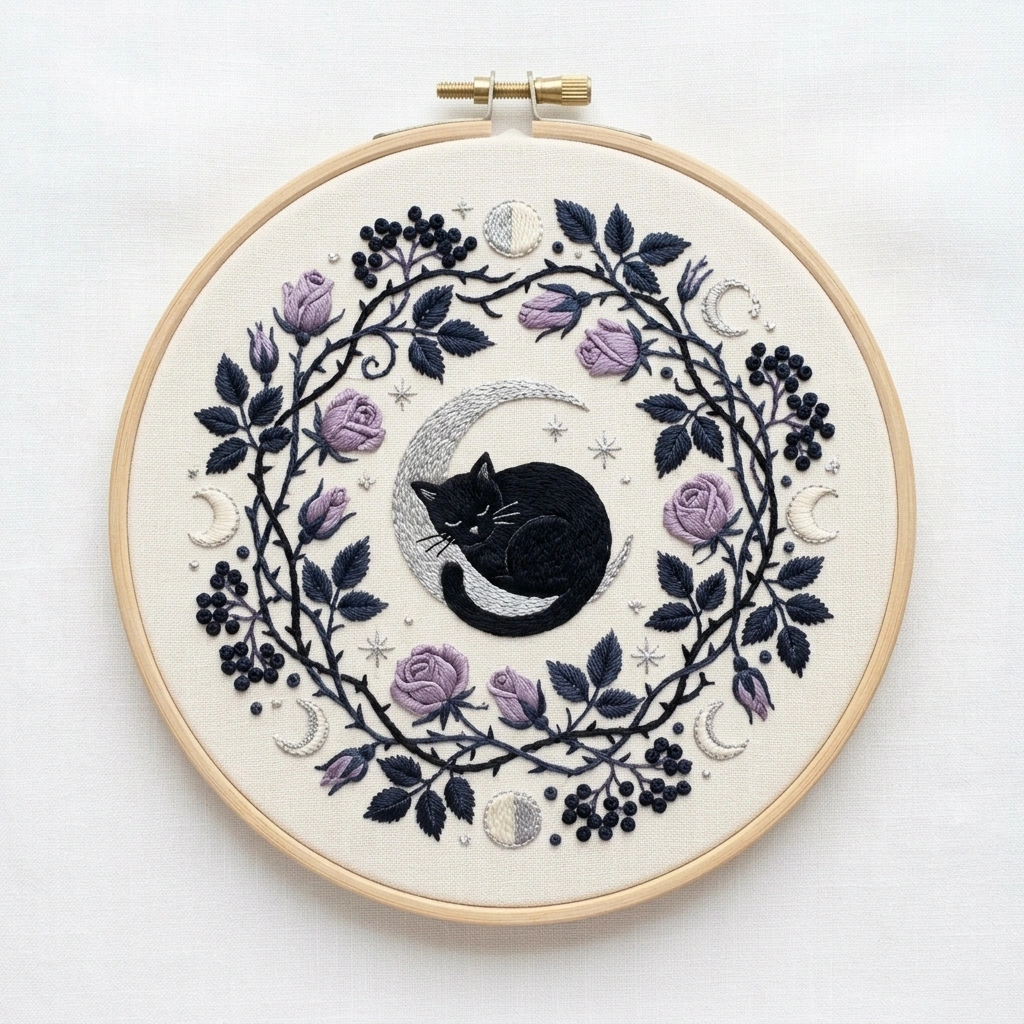
Black Cat Silver Crescent Lavender Wreath
View & download →
Haunted Crystal Ball Pumpkin Moon Wreath
View & download →
Herbal Apothecary Bottles Moon Phases Botanical Wreath
View & download →Frequently asked questions
How do I know if a pattern is too detailed?
Print it at the final hoop size. If several lines become difficult to distinguish or are only a few millimeters apart, simplify them.
What makes an embroidery idea beginner-friendly?
A clear silhouette, limited colors, manageable stitch count and open spacing between important lines.