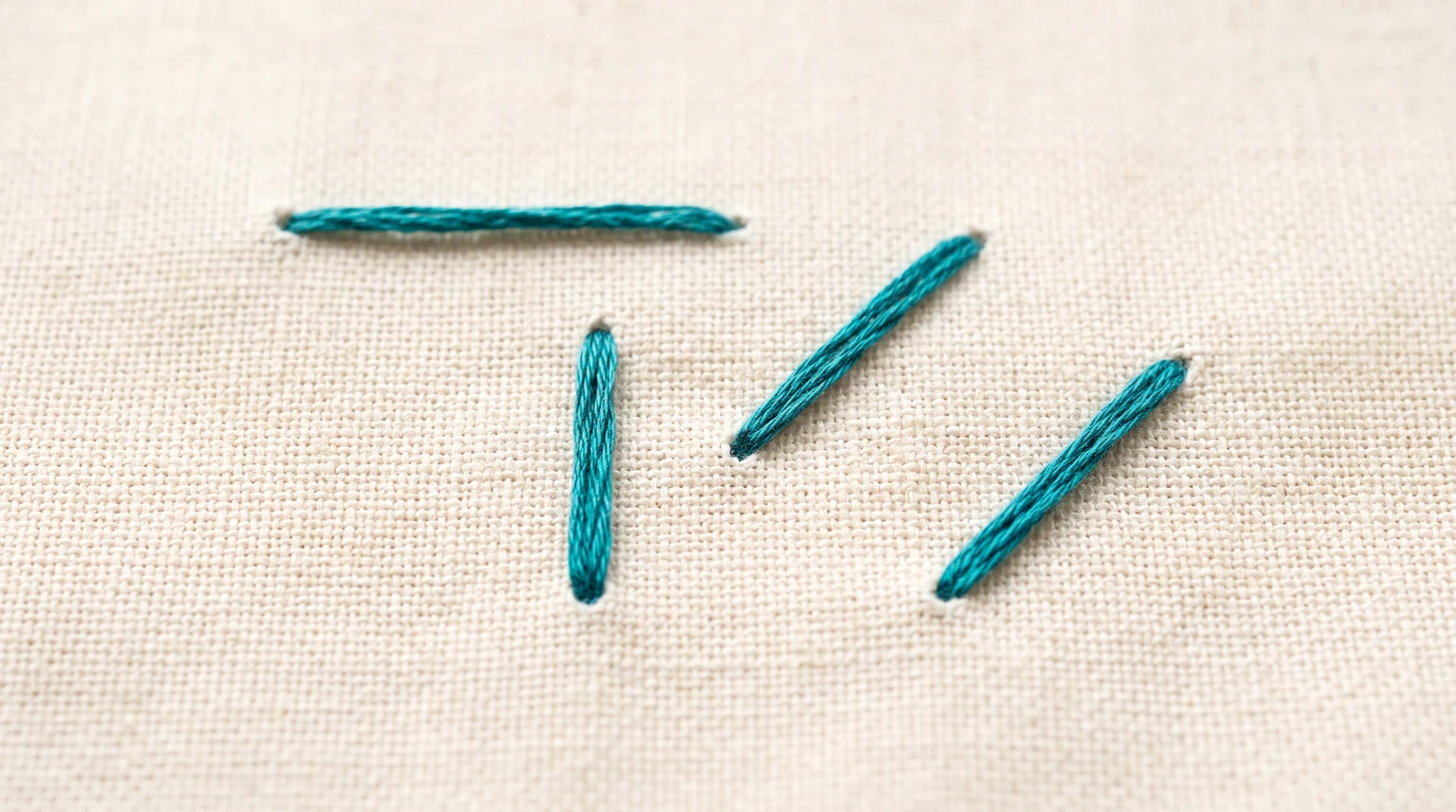
A straight stitch is one visible length of thread between two points on fabric. It can form a tiny accent, a narrow petal or one part of a textured fill. Its simplicity makes it useful for learning where to place the needle and how much to pull the thread. A single stitch should rest on the surface rather than gather the cloth.
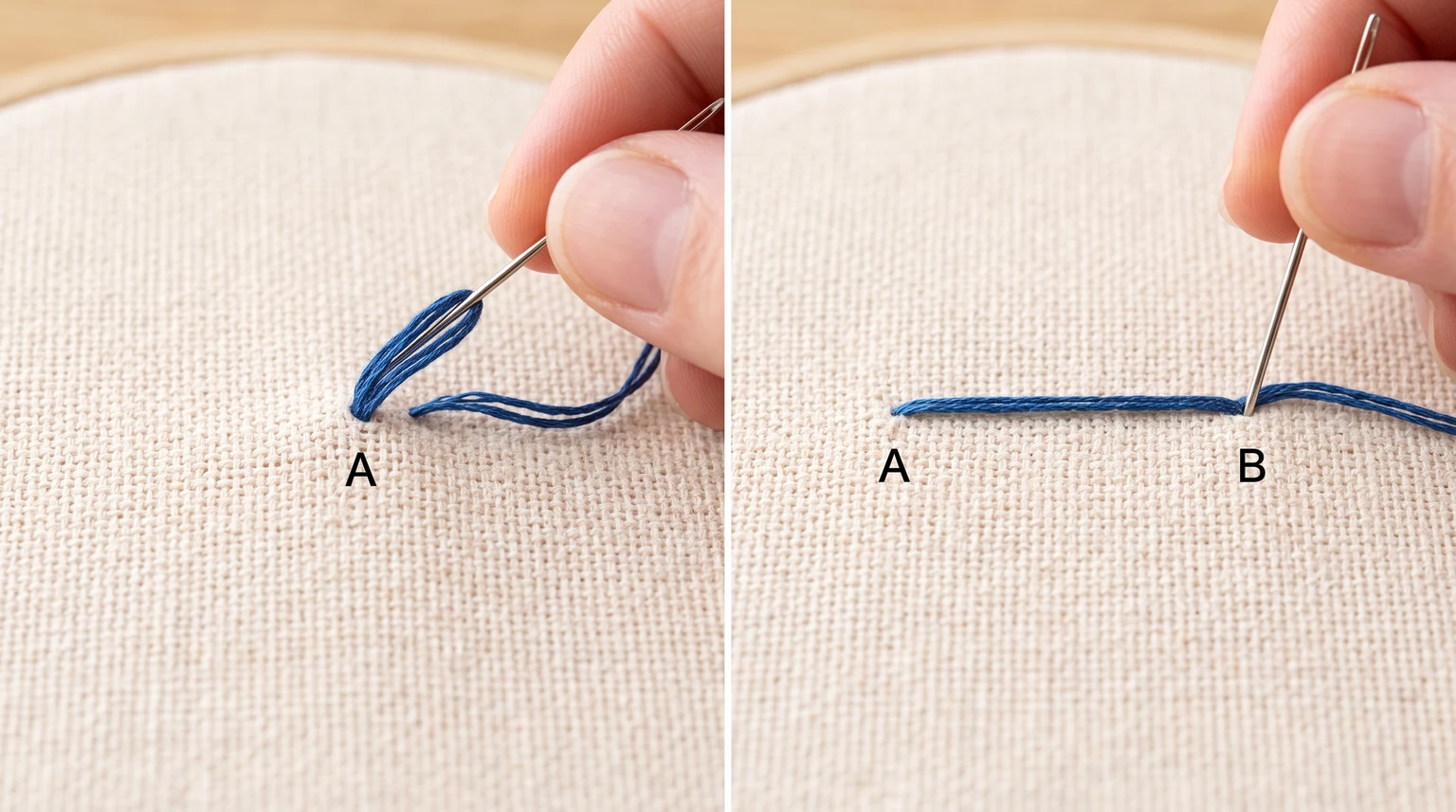
Bring the needle up at the start of the mark and take it down at the endpoint. Pull gently until the thread lies against the fabric. Choose the length and direction for the design instead of using the same size everywhere.
Prepare a straight stitch sample
Use stable woven cloth in a hoop with a suitable needle and a manageable length of cotton floss. Start with two or three strands, then try a finer and a thicker bundle on the same sample.
Mark a few short lines of different lengths. Leave room between them so you can see how each stitch sits. Very long unsupported stitches can snag, so keep the first practice marks small.
Make the stitch step by step
- Secure the thread on the back of the cloth.
- Bring the needle up at the first point.
- Take it down at the second point to make one straight mark.
- Pull the thread until it lies flat, without dimpling the fabric.
- Bring the needle up at the beginning of the next mark.
- Continue, then secure the working thread under existing stitches on the back.
Long travel threads on the back can show through light fabric. Work nearby marks together or start a new thread where that keeps the reverse clearer.
Use straight stitches in a design
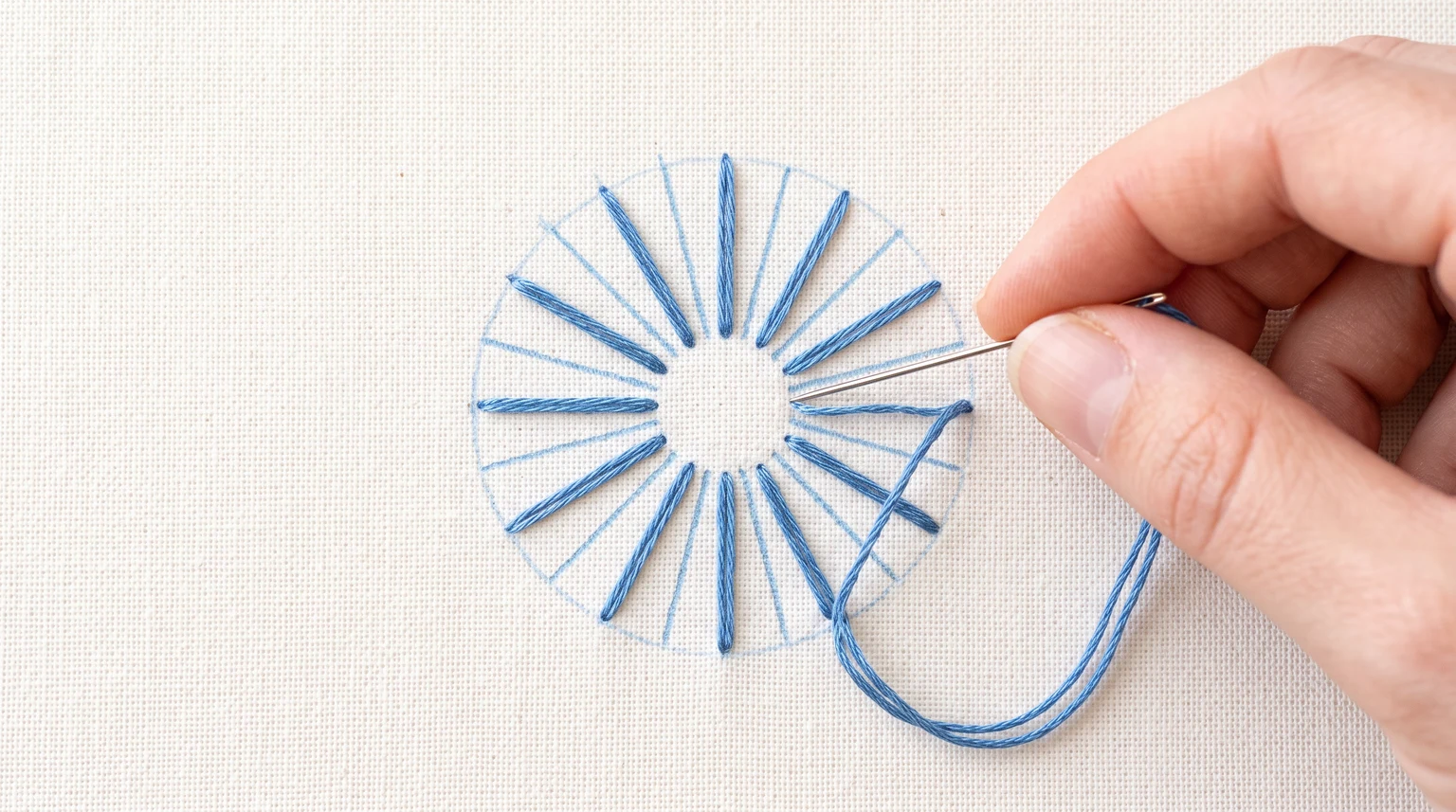
Arrange marks around a center for a simple flower, or cross them around one point for sparkles. Change direction deliberately so the stitch follows the shape.
Closely packed parallel straight stitches become a satin stitch fill. Separate short marks can suggest seeds, grass or other little accents. For a continuous outlined curve, backstitch or stem stitch may be easier than disconnected marks.
Frequently asked questions
How many strands do I need for straight stitch?
Use the count required by the pattern. Two or three strands are a convenient first trial; fewer make a fine detail and more create a bolder mark.
Is straight stitch the same as satin stitch?
A straight stitch is one mark. Satin stitch is a group of closely placed parallel stitches that fills a shape.
Further reading
Adapted from SimpleEnglishGuide.pdf, PDF pages 6, 7. Wording and practical notes have been edited for this website.