
Whipped backstitch adds a second thread around an ordinary backstitch line. The foundation controls the path, while the whipping softens the segmented appearance and can add color contrast. During this second stage, the needle mainly passes under existing stitches above the fabric.
First stitch a regular backstitch line. Bring a second thread up at one end and pass it under each foundation stitch from the same side, keeping a gentle consistent wrap. Take it down at the far end and secure it.
Make an even backstitch foundation
Use the backstitch guide to create a short straight line or gentle curve. Keep the segments similar in length and let them lie flat.
For the first sample, use a second color so you can see the wrapping path. A blunt needle can reduce the chance of splitting the foundation, provided it works with the thread you have chosen.
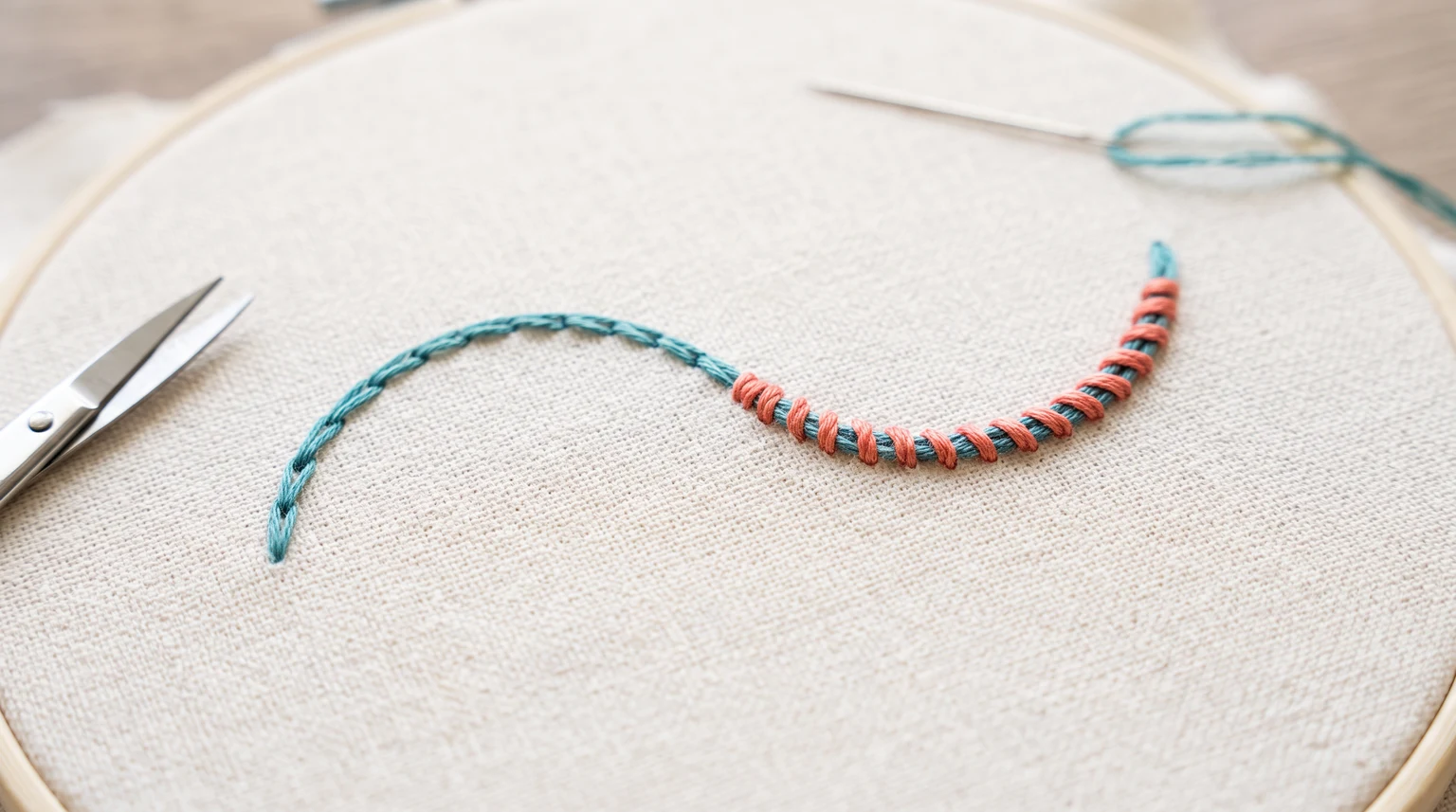
Wrap the foundation in one direction
- Secure the second thread and bring it up at one end of the backstitch line.
- Pass the needle under the first foundation stitch without piercing the cloth.
- Pull gently until the wrap rests around that segment.
- Pass under the next stitch from the same side.
- Repeat along the line with the same wrapping direction.
- Take the thread down at the end and secure it on the back.
Returning from alternating sides creates a different lacing effect. For a consistent whipped line, repeat the same side-to-side movement at every foundation segment.

Keep the outline smooth
If the foundation bunches up, loosen the whipping thread. The wrapping should decorate the line without pulling its segments together.
If the second thread catches, guide the needle under rather than through the stitched bundle. Use a shorter working length if twisting interferes with the movement. Try a matching color for a subtle outline after learning with contrasting colors.
Frequently asked questions
Do I pierce the fabric during every wrap?
No. The whipping passes beneath the existing backstitches above the cloth. Pierce the fabric to start and finish the second thread.
Why does my whipping look like a zigzag?
You may be changing the side from which the needle passes under each stitch. Keep the movement consistent for the whipped effect.
Further reading
Adapted from SimpleEnglishGuide.pdf, PDF pages 19. Wording and practical notes have been edited for this website.