
Tracing transfers a drawing directly onto fabric using light behind the printed pattern. It is an accessible method for light cloth that lets the lines show through. A bright window or light box can provide the light, while tape keeps the layers from shifting. Opaque fabric needs a different transfer method.
Secure the printed pattern, position the fabric over it without stretching the weave and trace with a tested marking tool. Check the complete drawing before removing the layers and before putting the cloth in a hoop.
Prepare the pattern, cloth and light source
Print the drawing at the intended size. Check any scale marker before transferring a pattern downloaded as a PDF. Prepare and press the blank cloth according to its care instructions.
Hold the fabric over the pattern to see whether the lines remain clear. A stronger light does not make every thick or dark fabric transparent. If the drawing is hard to see, use suitable transfer paper or soluble stabilizer.

Trace the drawing step by step
- Attach the printed pattern to a window or light box so it cannot slide.
- Place the fabric over the drawing with its woven threads straight.
- Secure the cloth gently without stretching it.
- Trace the main outlines lightly using a tested fabric marking tool.
- Lift a corner to check the marks while keeping the layers aligned.
- Finish the drawing and remove the tape carefully.
Do not add every decorative detail automatically. Mark the lines that guide the stitches, including a few direction lines when they help a filled shape.
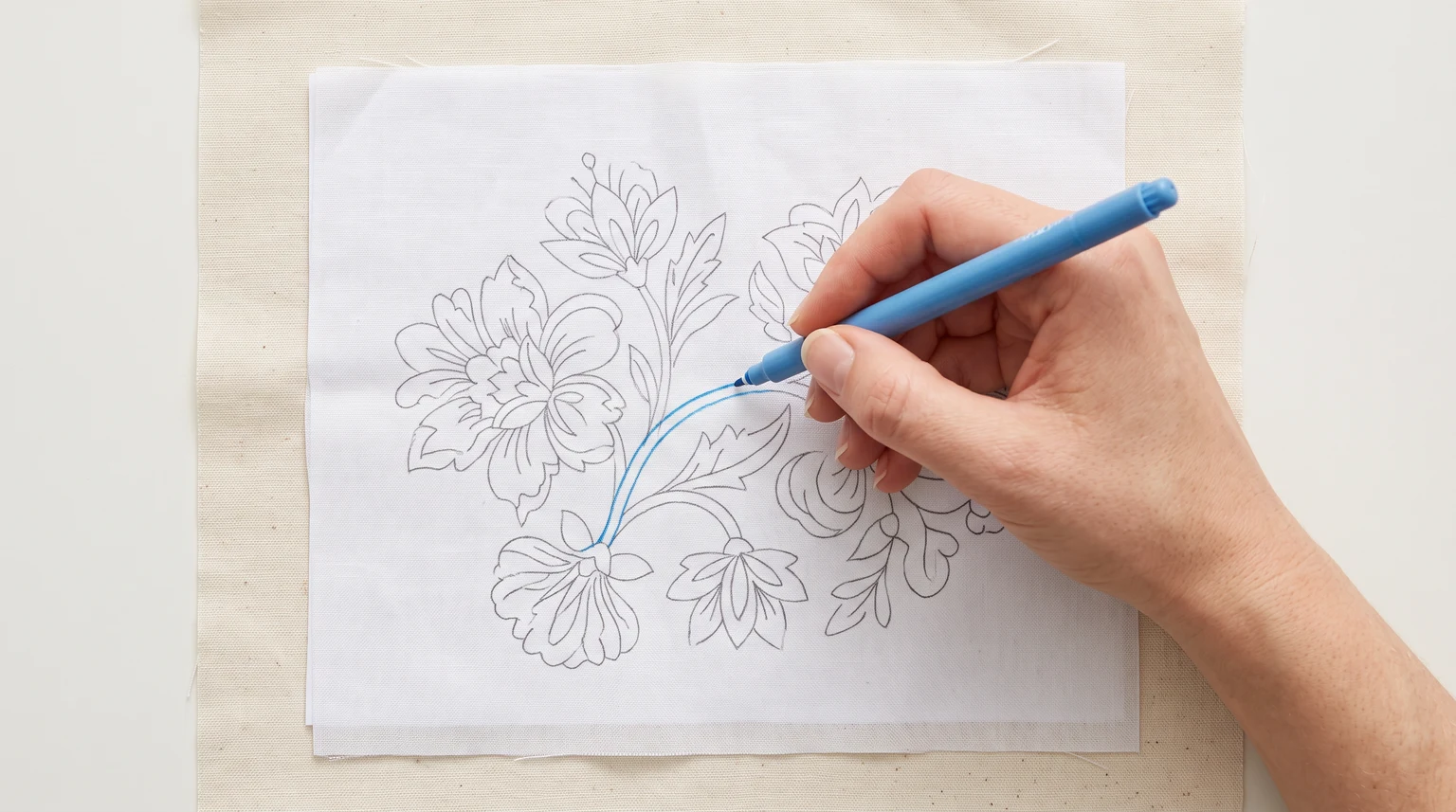
Check the transfer before stitching
Compare the traced drawing with the print. Check the center, flower tips and any symmetrical parts. Correct a shifted outline before surrounding it with stitches.
Fit the cloth in the hoop and check again. A circle should not become an oval, and straight lines should not bend because the fabric was pulled unevenly. Keep the finished design's removal process in mind before choosing how dark to make the lines.
Frequently asked questions
Can I trace onto black fabric?
Ordinary backlit tracing is usually difficult on dark opaque cloth. Use a suitable contrasting transfer method instead.
Do I mirror the printed pattern for tracing?
No, direct tracing normally uses the drawing in its final orientation. Reversing is needed only for transfer methods that specifically require it.
Further reading
Adapted from SimpleEnglishGuide.pdf, PDF pages 4. Wording and practical notes have been edited for this website.