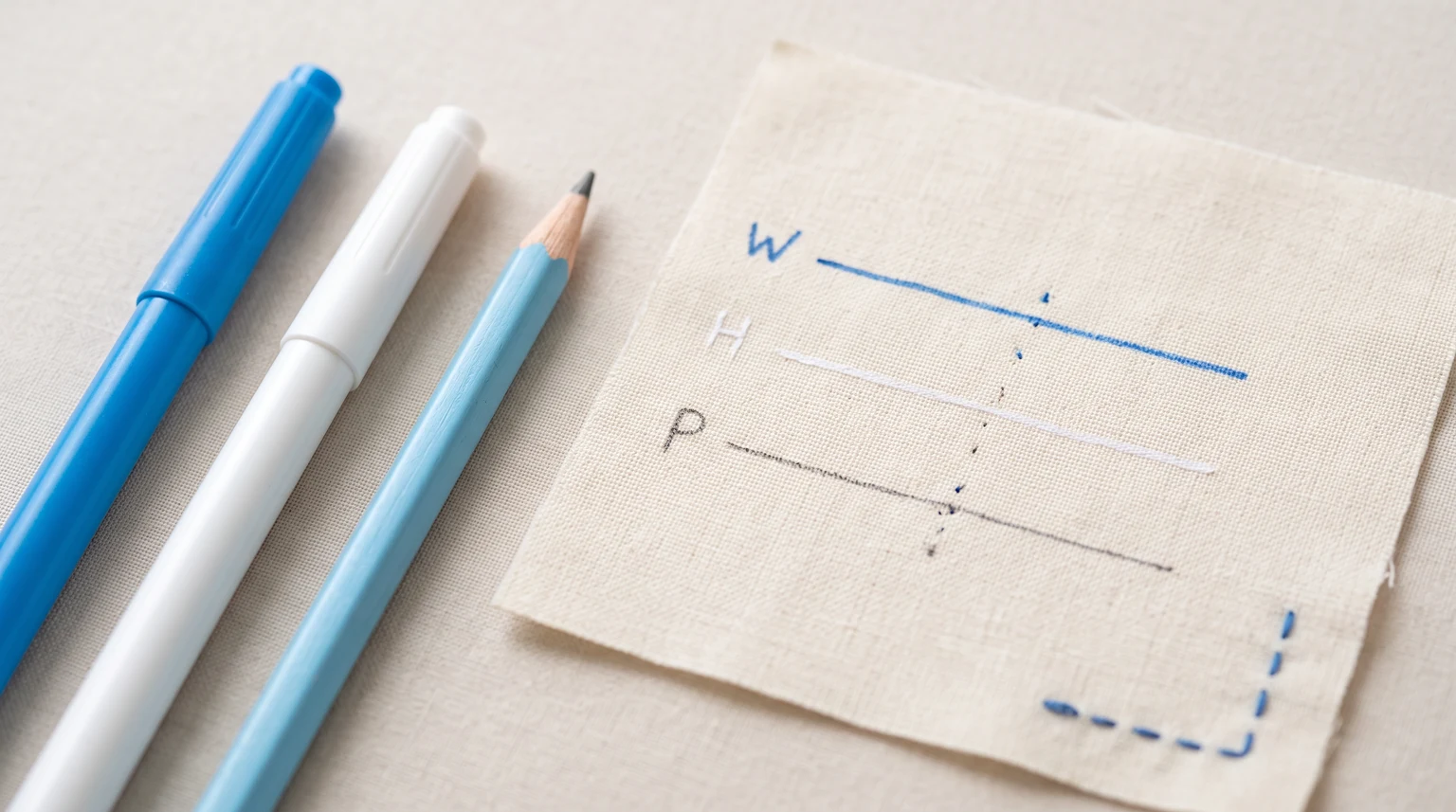
An embroidery marking tool puts a temporary drawing on fabric. A pencil, water-soluble pen or heat-erasable pen can help you follow a pattern, but each has different limits. A mark that disappears on one cloth may remain on another. Choose by the finished item's care needs, not only by how easy the tool is to draw with.
Test the complete marking and removal process on matching scrap fabric. Use light, narrow lines and avoid heat until you know how the marking product behaves. Choose a tool compatible with the cloth and thread.
Compare the three common marking tools
Pencil: useful for fine lines that will be covered, but not reliably removable from every cloth. Avoid dark pressure marks.
Water-soluble fabric pen: makes visible lines that are removed according to the product's water instructions. The finished materials must tolerate that process.
Heat-erasable pen: removes visible color with the stated heat treatment, but some products can leave residue or marks that return. Use a product suitable for the textile and test its behavior.
Test before drawing the full pattern
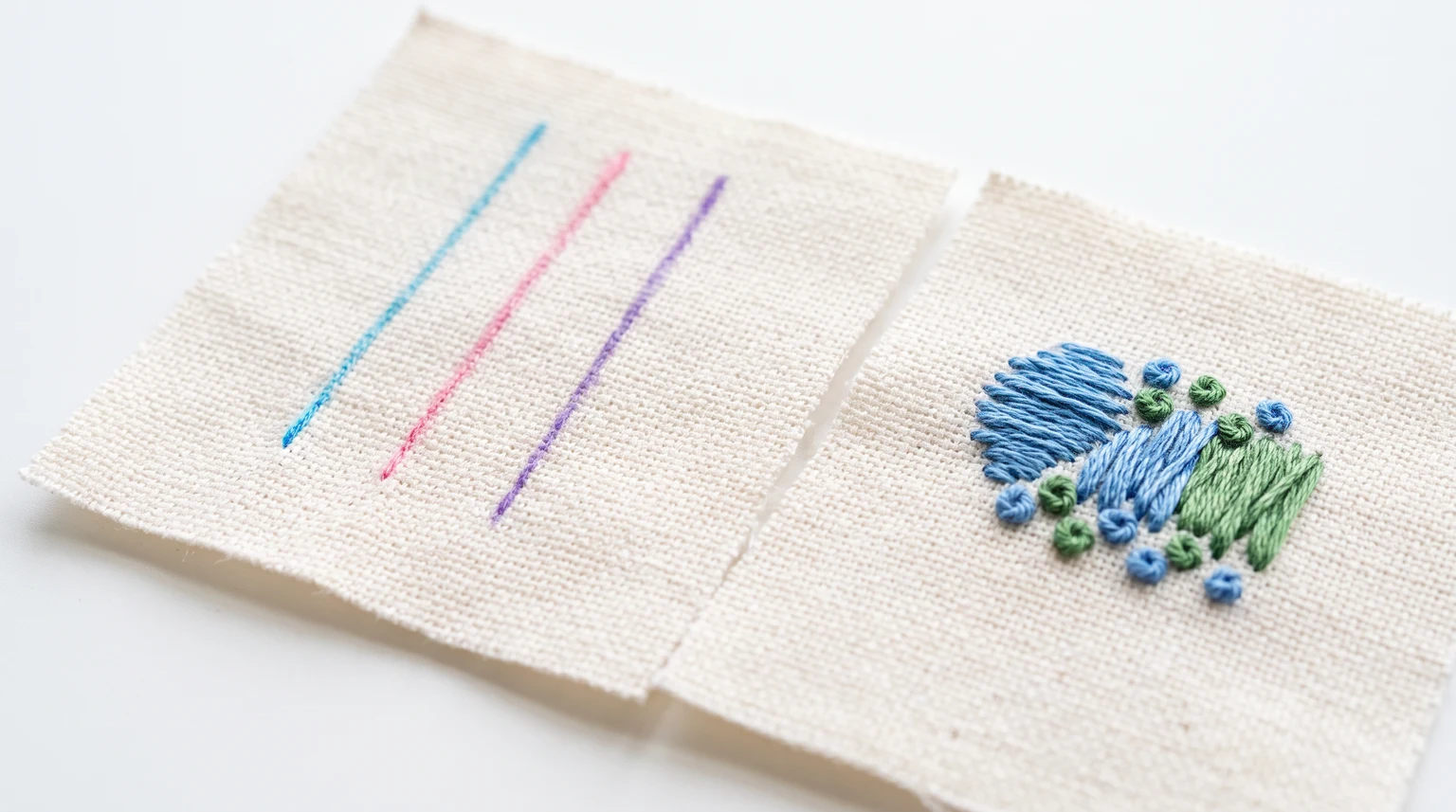
- Use a scrap cut from the same fabric as the project.
- Draw a light line and a slightly heavier line.
- Add a few stitches with the intended floss.
- Remove the marks using the product's directions.
- Let the sample dry and inspect it in good light.
This test checks the fabric, marking tool and thread together. Testing a pen on plain paper tells you little about the final embroidered cloth.
Draw clear lines and remove them carefully
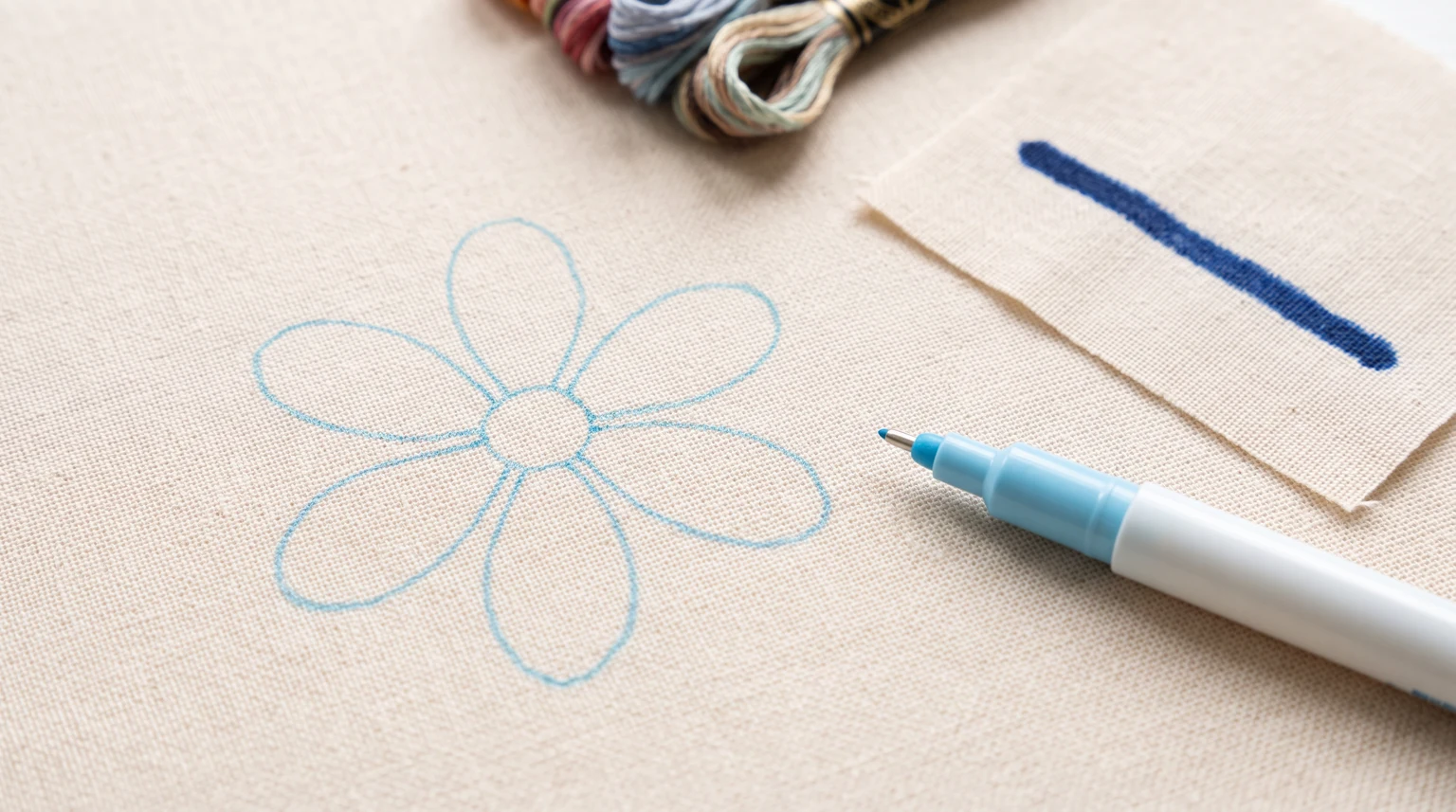
Transfer only the outlines and direction marks needed for the stitches. Keep a design from shifting while you trace it and avoid repeatedly going over the same line. A thin guide is easier to cover with backstitch than a broad dark one.
Do not press unknown pen marks or use heat as a general cleaning method. If the fabric cannot be washed, choose a different transfer process or ensure the drawing can be covered. The pattern transfer guide compares these alternatives.
Frequently asked questions
Can I use an ordinary ballpoint pen?
It is usually a poor choice for temporary embroidery guides because the ink may remain or spread. Use a tested textile marking method instead.
Can heat-erasable marks return?
Some products can behave that way under certain conditions. Read the product information and test before choosing them for a finished piece.
Further reading
Adapted from SimpleEnglishGuide.pdf, PDF pages 3, 4. Wording and practical notes have been edited for this website.