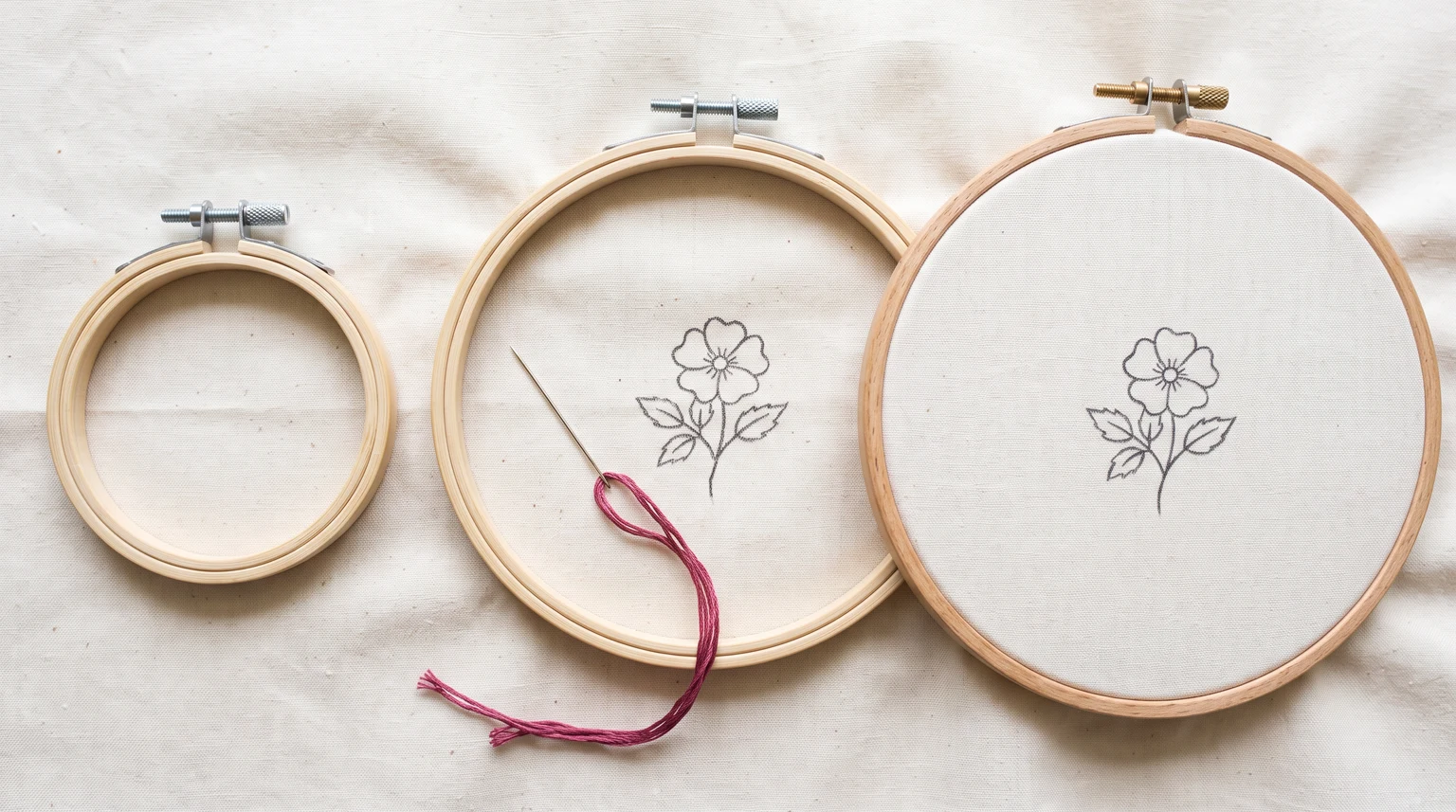
An embroidery hoop holds fabric between two rings so the needle can enter and leave without dragging the material out of shape. A suitable hoop makes outlines easier to follow, helps filled stitches lie evenly and gives your supporting hand a comfortable place to grip. Choosing one is mainly about the size of your working area, the fabric and how you like to sit while stitching.
For a small first project, a 5- or 6-inch hoop is a useful starting size. Fit non-stretch woven fabric over the inner ring, add the outer ring and tighten gradually until the surface is smooth and firm without stretching the weave.
Choose an embroidery hoop size
Measure the design before choosing a hoop. If the whole motif fits with a little clear space around it, you can work without moving the frame. A larger design can be stitched in sections in a smaller hoop, provided you can avoid crushing raised stitches when repositioning it.
| Hoop diameter | Suitable use | Trade-off |
|---|---|---|
| 4 inches | Small initials or single flowers | Less room for your supporting hand |
| 5-6 inches | First samplers and compact floral designs | Large motifs need repositioning |
| 7-8 inches | Medium wreaths and larger compositions | Reaching the center may tire your hand |
These sizes are starting points, not rules. Hold the hoop before buying if possible. You should be able to reach the center without changing your grip every few stitches.
Wood, plastic or a display hoop?
A wooden screw hoop is simple to adjust and often works for both stitching and display. Check that the rings are smooth, round and free of splinters. Plastic hoops may have a ridge that grips the fabric, but their fit varies. Judge the actual hold rather than choosing by material alone.
A decorative display frame does not necessarily provide good working tension. If the fabric keeps slipping, stitch in a dependable working hoop and move the finished piece into its display frame. For delicate fabrics, a strip of cotton tape wrapped smoothly around the inner ring can improve grip; keep any joins away from the work area.
How to put fabric in an embroidery hoop
- Cut the fabric with enough extra material to grip outside the rings and finish the back later.
- Loosen the screw and separate the rings. Lay the inner ring flat, then place the fabric over it with the design centered.
- Press the outer ring down evenly. Do not force a tightly closed ring over the fabric.
- Tighten the screw partway. Smooth small wrinkles by gently adjusting fabric around the outside, keeping its woven threads straight.
- Tighten again and check the whole surface. It should resist the needle without becoming stretched or distorted.
If the transferred design changes shape, loosen the hoop and start again. Pulling hard on one edge may remove a wrinkle while introducing distortion elsewhere.
Fix slipping, puckering and hoop marks
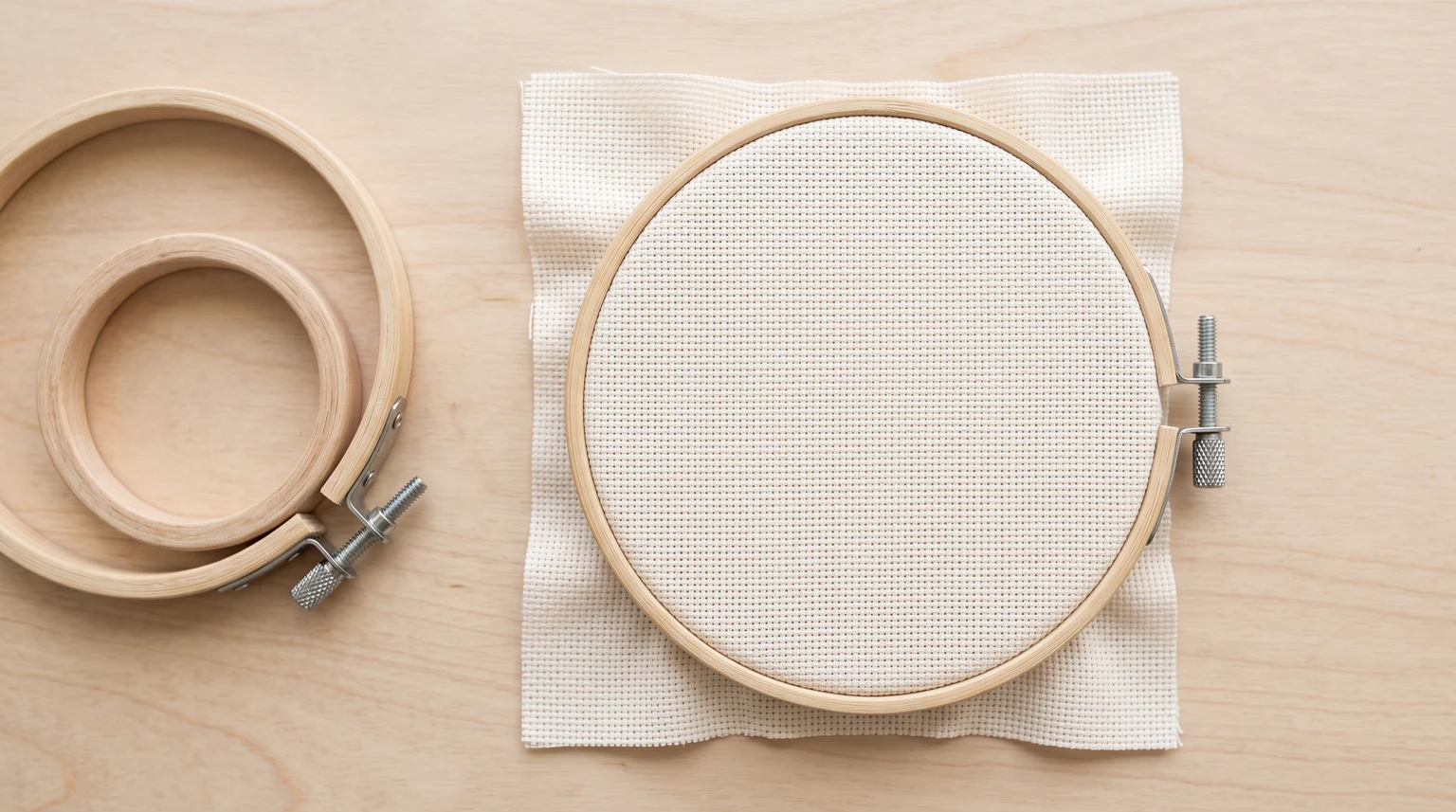
Slipping fabric: check that the two rings fit evenly and the screw holds securely. An uneven ring or a fabric that is too thin for the grip can be the cause. Adjust between stitching sessions rather than continually pulling the design sideways.
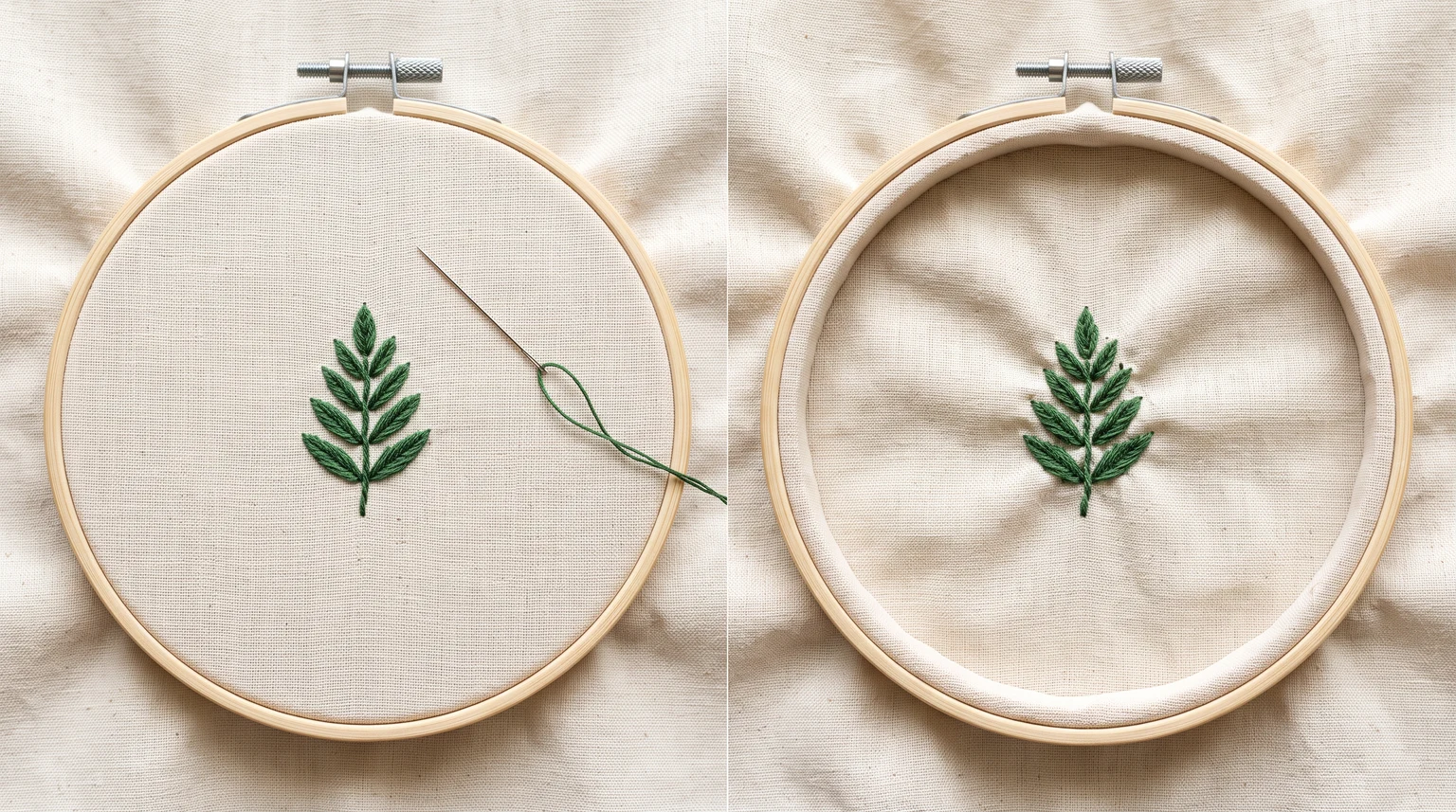
Puckering: loosen the hoop to see whether the fabric relaxes. If wrinkles remain around a stitched area, the thread may have been pulled too tightly. Hooping the fabric more firmly cannot correct stitches that have gathered the cloth.
Hoop marks: release the fabric between sessions, especially on materials that crease easily. Follow the fabric and thread care instructions before washing or pressing a finished piece. Keep the iron away from raised embroidery and test any marking pen before applying heat.
Use the hoop for your first flower
Try a small daisy embroidery motif in the center of the hoop. Begin with a short stem, then check that the fabric remains flat before adding petals. This makes it easier to tell whether a problem comes from hoop tension or from pulling the thread too hard.
When the stitching is complete, use the hoop finishing guide to secure the excess fabric neatly. Leave enough cloth outside the working hoop until you have chosen the final finish.
Frequently asked questions
Does embroidery fabric need to sound like a drum?
A firm, smooth surface is useful, but sound is not a reliable test. The weave and transferred drawing should remain undistorted.
Can I embroider without a hoop?
Yes. Some stitchers work in hand, especially on small or firm fabrics. A hoop is often easier when learning surface embroidery because it supports the fabric.
Can I use the same hoop for stitching and display?
Yes, if it provides good tension and suits the finished piece. Clean the hoop and adjust the fabric before securing the back.