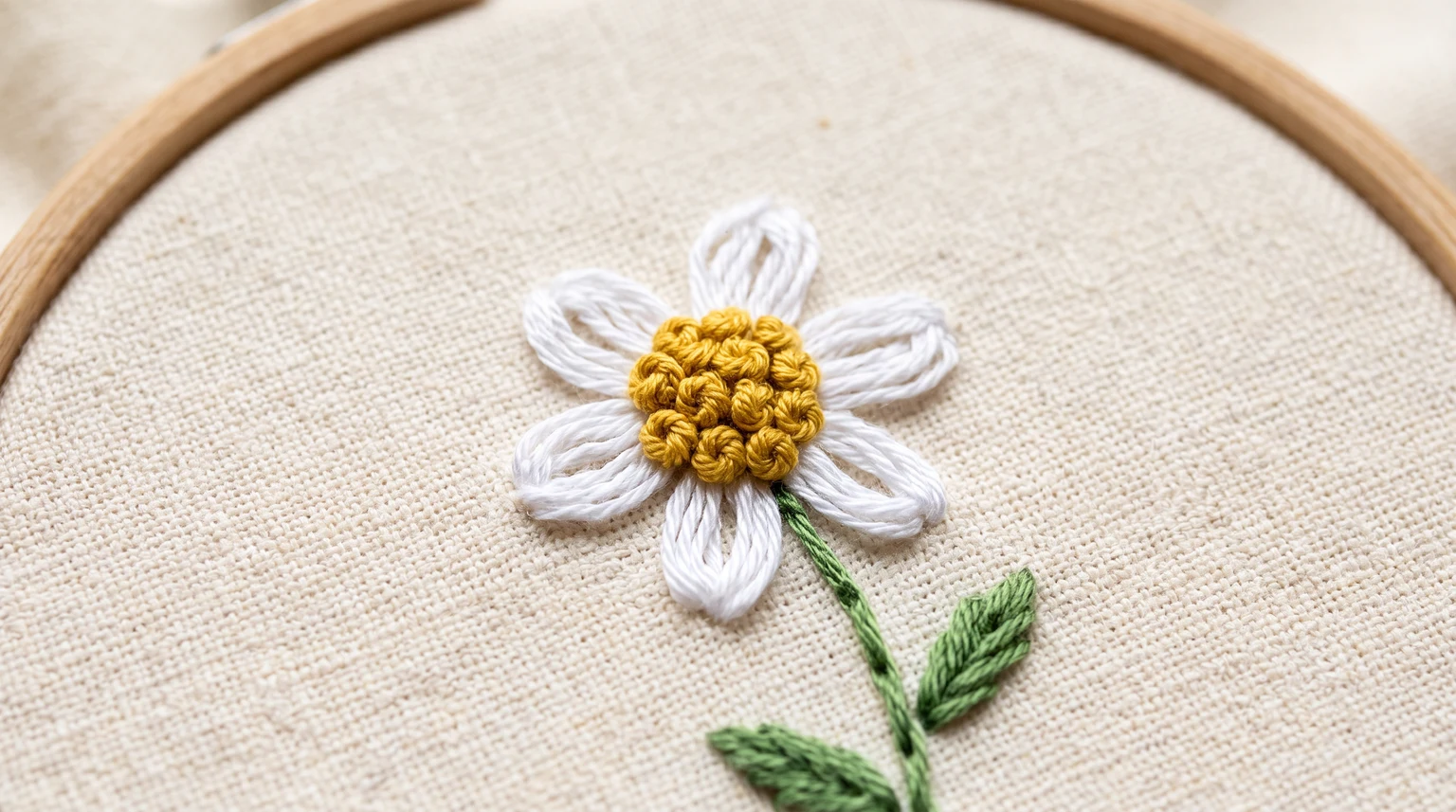
A French knot makes a small raised dot on the surface of fabric. It is useful for flower centers, tiny accents and textured clusters. The stitch combines a wrapped needle with controlled thread tension, so it may feel awkward before the movement becomes familiar. Practice a few separate dots before filling a whole center; that makes it easier to see where a knot went wrong.
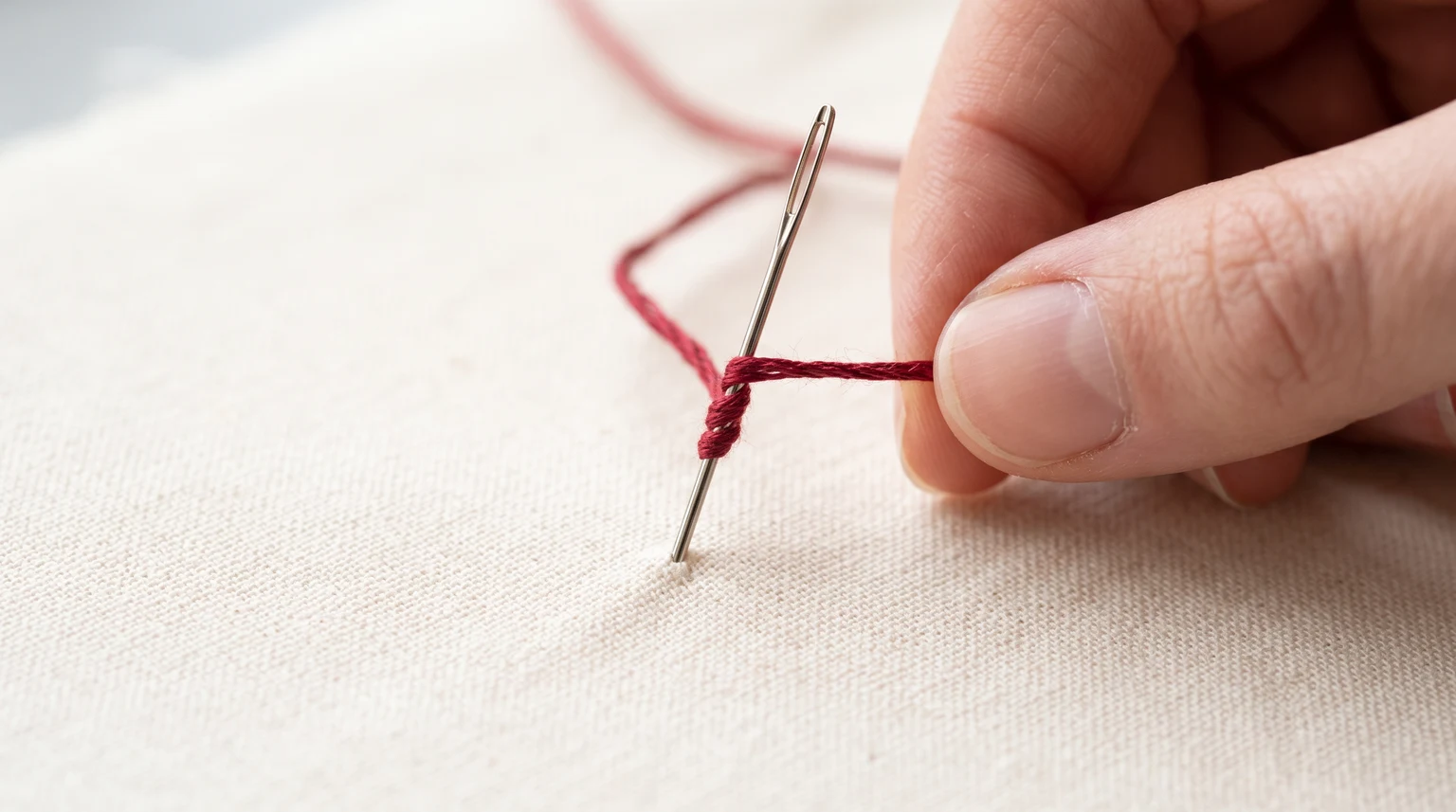
Bring the needle up, wrap the working thread around it once or twice and insert the point very close to the starting hole, but not through the same opening. Hold the wraps gently at the surface while pulling the needle through to form a compact knot.
Set up for a first French knot
Use stable woven fabric in a hoop and a suitable embroidery needle. Two strands of cotton floss and one wrap are a useful starting trial for a small dot. A compact weave helps the knot stay on the surface instead of disappearing through a large opening.
Keep the working thread short enough to control. The knot is easier when you can hold the thread near the fabric with your supporting hand and pull the needle with the other. Rest the hoop on a table or use a stand if holding it makes the movement difficult.
How to make a French knot
- Bring the needle up at the position of the dot and pull the working thread through.
- Hold the thread gently with your supporting hand, close to the fabric.
- Wrap the thread around the needle once or twice while keeping the wraps controlled.
- Place the needle point beside the original hole, leaving a small fabric thread between the two entry points.
- Slide the wraps toward the surface and keep light tension on the working thread.
- Pull the needle through slowly, maintaining that support until the knot settles.
- Release the tension once the knot is complete and check that it rests on the surface.
The thread should be held steadily rather than stretched tightly. If the needle will not pass through the wraps, loosen them a little before pulling again.
Control the knot size
Strand count, number of wraps and tension all affect the result. To make a larger dot, test more floss strands with a suitable needle instead of piling many tight wraps onto a fine needle.
For a consistent cluster, keep the same strand count and wrap count, then place each dot deliberately. You can vary spacing for texture without changing the size of every knot. A small piece of scrap cloth lets you compare one-wrap and two-wrap samples before choosing a center for the actual flower.
Fix disappearing knots and loose loops
The knot disappears: check that the needle went down beside the first hole rather than into it. An open weave may also need a larger knot or a different supporting fabric.
A loose loop remains: keep the working thread under gentle control until the wraps settle. Letting go while the needle is halfway through can allow them to open.
The knot sticks above the surface on a stalk: seat the wraps near the cloth before pulling the needle through. Avoid drawing them down from far up the shaft.
The needle gets stuck: reduce wrap tension and check whether the eye is much wider than the shaft. A needle suited to wrapped stitches may help.
The dots look uneven: repeat the same setup on a short practice row before returning to the project. Do not pull finished knots aggressively to reshape them.
Use French knots for flower centers
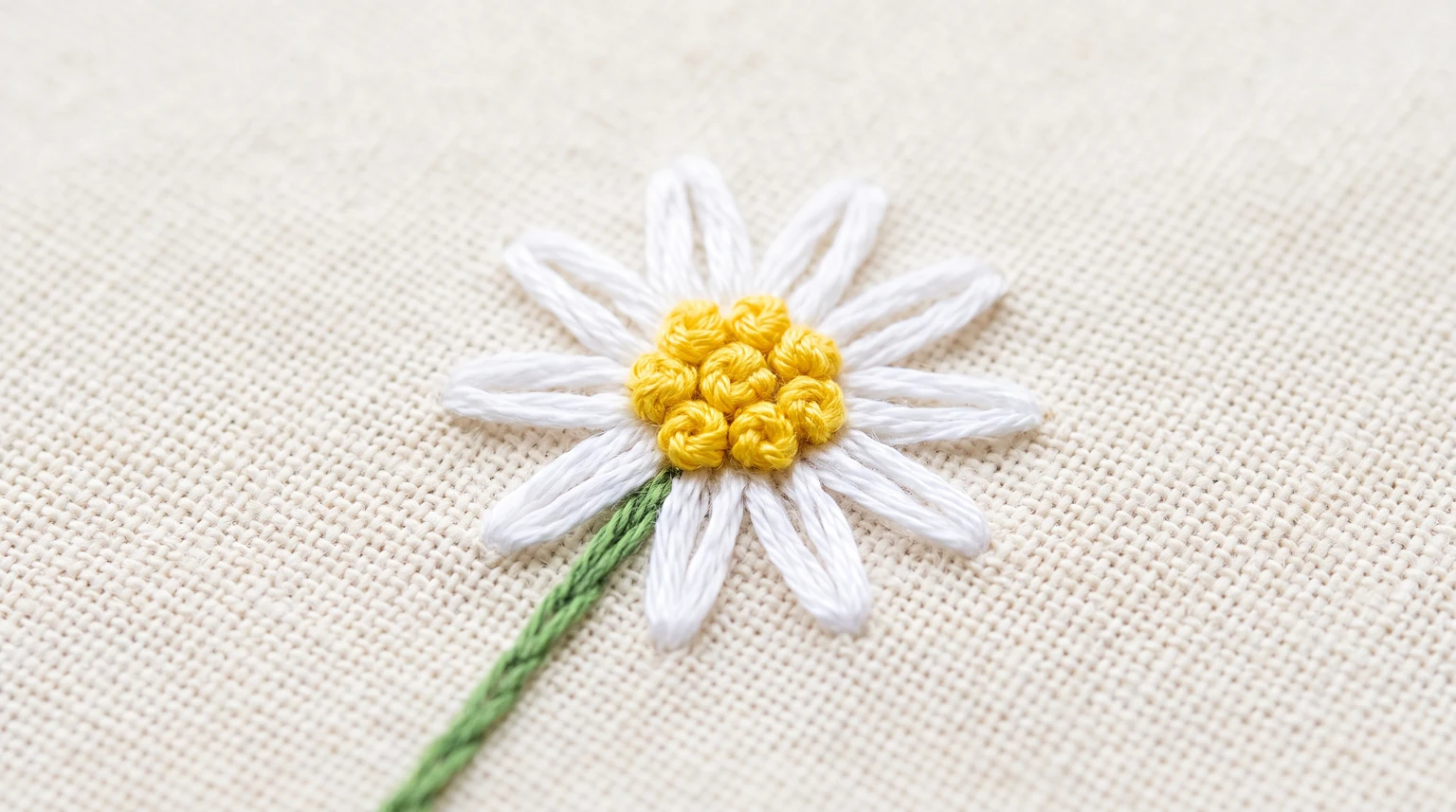
For a daisy center, stitch the petals first and fill the small central area afterward. Place a few knots in the middle, then add dots around them until the center looks balanced. Stop before the cloth becomes crowded with repeated needle holes.
Keep raised knots away from a hoop ring when moving a larger project. For a first complete motif, combine a backstitched stem, detached-chain petals and a knot center using the beginner embroidery guide.
Frequently asked questions
How many wraps should a French knot have?
One or two wraps are a practical starting point. Test the thread and needle combination before increasing the size; extra wraps can be harder to control.
Why does my French knot pull through the fabric?
You may be returning through the original hole, or the opening in the weave may be too large. Insert the needle beside the starting point and test a suitable knot size.
Can I use French knots for every flower center?
They suit many small textured centers. A flat filled center or a few straight stitches may be better when you want less height or are working on a very tiny motif.